City coat of arms:

Visited:31. 3. 2021
History:Chomutov (German: Komotau) is a town located about 49 km southwest of Ústí nad Labem. The name of the town is derived from the personal name Chomút, Chomout meaning Chomout's court. In historical sources, the name occurs in forms such as Fridericus de Chomutov, filius Nacherati, fratribus hospitalis s. Marieae Theutunicorum dat oppidum Chomutov cum villis (1252), Chomontowe (1261), in Cometave (1281), in Chomutow (1290), in oppido Comatow (1321), in Chomatow (1325), in Chomotov (1330), de Chomutow (1332), comentur ze Comentow (1355), Comotaw (1369), de Chomutoua (1389), w Chomutowie (1455), Kommotau (1787) or Komotau, Kommotau and Kommothau (1846). This town was founded by a Slavic tribe sometime in the 12th century, since according to the historian J. V. Šimák the local forests were already cleared by the brothers Načerat and Smil in 1188. The first mention of Chomutov dates back to 29 March 1252, when Bedřich Načeradec of Chomutov, who was the son of Načerat, donated the town to the Order of German Knights, who established their commandery here in 1254. It is thanks to the deed, which says "de Chomutaw", that we learn that it was originally a Slavic settlement. Thanks to the influence of the Order of German Knights, the town became very Germanized, hence the saying: "Everywhere people, in Chomutov Germans." King Přemysl Otakar II confirmed the town as the property of this commandery on 1 February 1261. Already at that time this settlement was a market settlement. It was also at this time that the town acquired the right of jurisdiction and the right of the throat. In the second half of the fourteenth century, the original wooden walls were replaced by stone walls in the form of double massive walls surrounded by ramparts and a deep and wide moat filled with water. Already at this time the town fortifications had four gates. In a charter dated 1 August 1335 issued by King John of Luxembourg, we learn that the settlement was granted town rights. On 28 October 1396, the commander Albrecht of Dubá granted the town a seal with a coat of arms. German knights held the Chomutov estate until 1411, when King Wenceslas IV took it away from them after the Battle of Grunwald (except for the patronage of the churches). And no wonder, the Order of the Teutonic Knights was not subject to secular jurisdiction, and so there were constant disputes with the king. However, even when the King confiscated the property of the Order, the town remained the property of the Order, as the owner could only lose the property in the provincial court. During the Hussite wars, Chomutov sided with the Catholic side and played one of the Catholic strongholds of the Žatec region. The first tragedy during this period struck in 1418, when the town burned down. Then, on 16 March 1421, Chomutov was besieged by the Hussites under Jan Žižka of Trocnov, and after two days of siege, it was captured and sacked and most of the inhabitants slaughtered. An estimated 2,200 men women and children were killed. The Hussites left only a few women, children and 30 men alive to bury the dead. After that, the town changed noble owners; the last of them were the Hasištejn family of Lobkowice. When in 1424 the town was seized by the Emperor Sigismund MIkuláš of Lobkowice, who was one of the first places in Bohemia to enforce severe recatholization. After Lobkovice, Jakoubek of Vřesovice, who was one of the leaders of the Hussites, became the town administrator. In 1441 this man secured the annual market for the town.
In 1454, the town passed into the hands of Nicholas II of Lobkowitz, who gave it up in 1455 to Jan Calta of Kamenná Hora. This man renewed the town council and obtained a charter for the town, which was drawn up on 13 November 1457, confirming the town's rights and giving the town a coat of arms and seal. As early as 1460, the first guild order was established in Chomutov, the Order of Linen Makers. A total of 23 guild orders were established in the town and were granted until 1659. After the death of Jan Calta in 1465, the town was inherited by his daughter Bonuše, who married Benes of Veitmile. The first known school was established here in 1510 and 1513, and a Latin school was founded around 1550, with the Lutheran Meissner as rector in 1566. We also learn that on 24 October 1525 the town was struck by fire and in 1531 by the plague. According to local chroniclers, an estimated 1800 people died there, but this number seems to be somewhat exaggerated. In 1560, the Veitmil family sold Chomutov to Archduke Ferdinand of Tyrol, who immediately began banning Protestant priests. In 1571, the Chomutov estate was sold to Bohuslav Felix of Lobkowitz and Hasištejn, who granted the town the right to exclusively sell beer in the surrounding 20 villages. During the reign of this man, the first witch trials began in Chomutov. Whenever witchcraft was suspected, the man was immediately driven to the torture chamber. The first local paper mill was founded in 1580, but the first written mention of this paper mill dates back to 1596. On August 28, 1588, the wife of Bohuslav Jáchym of Lobkovice and Hasištejn died, and this man decided to exchange the local estate with Jiří Popel of Lobkovice for the estate of Mladá Boleslav. However, this man was a fanatical Catholic and so he began to crack down on the local Protestants. He immediately invited the Jesuit order to the town and in 1591 bought seven houses for them, in which he set up a dormitory. D9ky bell bans on Protestants were triggered on 15 July 1591, the townspeople revolted against the Jesuits and sacked their residence, for which two of the leaders of the revolt were convicted and executed during the so-called bloody trial on 23 August 1591. As a result, all the town's rights were confiscated in the same year. After the condemnation of Jiří Popel the Elder of Lobkowice, Chomutov was confiscated by Rudolf II in 1594 and the town regained its town rights. Unfortunately, on July 24, 1598, Chomutov was engulfed by a huge fire that burned almost the entire town. The fire broke out in the suburbs when a young maid was boiling butter, which caught fire. By 11 a.m., 16 houses were on fire and by noon, half the city was burning. Unfortunately, there was no one to extinguish the town as the wind was strong and most of the inhabitants were in the fields. In total, the fire burned the church, the parish, the school, the town hall, the castle, 7 breweries, a number of maltings and 260 town houses. After this fire, the town was provided with water rills to irrigate the centre of the town. In 1605, the people of Chomutov redeemed themselves from serfdom and from then on Chomutov was a royal town. The oldest mining enterprise near Chomutov was the Kryštof stone mine of the Chomutov (originally Prague) burgher Lazar Grohman, who was granted the privilege to establish the mine on 24 October 1510. It was located together with the vitriol smelter in the area of today's Kamenec Lake. The first written mention of the mine dates back to 1558 from a privilege issued by John of Veitmile. The extracted raw material was processed into alum on site at the smelter, whose annual production was in the order of tens of tonnes (e.g. 62 tonnes in 1563). In 1770, the smelter began to be heated with coal supplied by the Pohlode mine. After the mid-17th century, the waterlogged area forced the costly construction of a drainage tunnel about 1 500 m long towards Otvice, the collapse of which in 1810 led to the flooding of the mine and the closure of operations. Attempts were subsequently made to re-drain the mine and restore production, but were unsuccessful.
However, since this largely Protestant town joined the side of the Estates' Revolt, after the Battle of White Mountain it had to hand over all its church buildings to the Jesuits. On 10 November 1620, Chomutov publicly surrendered to the emperor. In 1625, an epidemic broke out in this town, during which a total of 2,550 inhabitants died. Already in 1627, the town of Chomutov was restored to its town rights and privileges, and as a result, the inhabitants underwent a gradual and severe recatholization. During the Thirty Years' War, the town suffered from the fact that it was very economically strong, so much so that military detachments were dispatched from here. On May 10, 1639, the town was occupied by the Swedish army and they started looting here. It was not until 14 April 1640 that the town was taken over by an imperial garrison, but they too behaved like the Swedish garrison and plundered their own territory. Already in 1640 the local suffering was crowned by a plague epidemic, from which about 544 inhabitants died. But gradually the administrators bullied the town more and more, until innocent people began to be arrested. This resulted in a request for help from the royal chamber. The dispute that arose was won by the townspeople of Chomutov, as evidenced by the resolution of 9 August 1645, and on 24 November 1649 the town asked for the abolition of the governor's office. They supported this request by claiming that this office was established there because of the recatholization, which had already been completed. Thus, on 18 February 1651, the Emperor granted this request and the office of hetman was abolished. Even though the Thirty Years' War was over, the town again suffered from fire on 20 September 1652. At the turn of the 1850s and 1860s, the imperial road connecting Chomutov with Prague was built, along which development also developed on the right bank of the Chomutovka. Although Chomutov was situated along this important link to Saxony, it grew only slowly until the mid-nineteenth century. It was not until the seventies of the nineteenth century that a turnaround occurred with the connection to the railway lines running along the Ore Mountains and to Prague. At this time, brown coal mines were opened near Chomutov and in 1870 ironworks were established, which became known as the Mannesmann Tube Rolling Works after 1887; in 1890, seamless steel tubes were produced here for the first time in the world. The rolling mills, located on the eastern outskirts of the town, were joined in 1917 by the armaments branch of Poldi in Kladno, south of Chomutov, which after the war was also reoriented towards metallurgical production. The largest lignite mine in Chomutov was the Jan Žižka mine, which closed in 1992. The first enterprise in its mine field was the Augusta shaft opened in the 1960s. During the economic crisis in 1874 it changed hands and was given the new name of Karel. In 1895 it was bought by the nearby Mannessmann works. After the Karel shaft was damaged by fire, the new 105 m deep Julius mining pit was opened in 1904 and renamed the Jan Žižka Mine in 1946. At the same time as Augusta was opened, the Hugo mine was opened between Otvice and the defunct Michanice, connected by a siding to the main railway line at Kamenec Lake. It was abandoned in the 1870s with a total output of around 60 000 tonnes. The third important Chomutov mine was Max on the southern outskirts of the town. It was also established in the 1860s and reached a depth of more than 100 m even then. Two seams were mined there: the upper one (1.5-3 m) and the lower one (5-6 m). In addition to these, they were also mined for clasts, which were used as raw material for the production of alum. Until its closure in 1887, it produced 5-6 000 tonnes of stone raw material per year and up to 800 000 tonnes of coal during its existence. Other mines were located in Horní Ves.
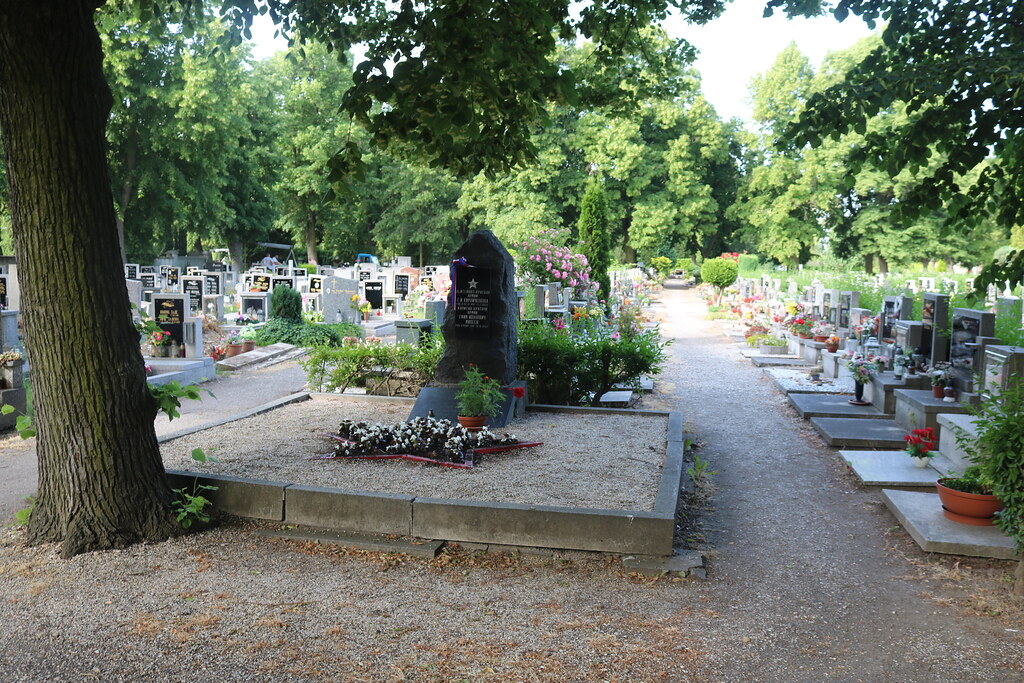
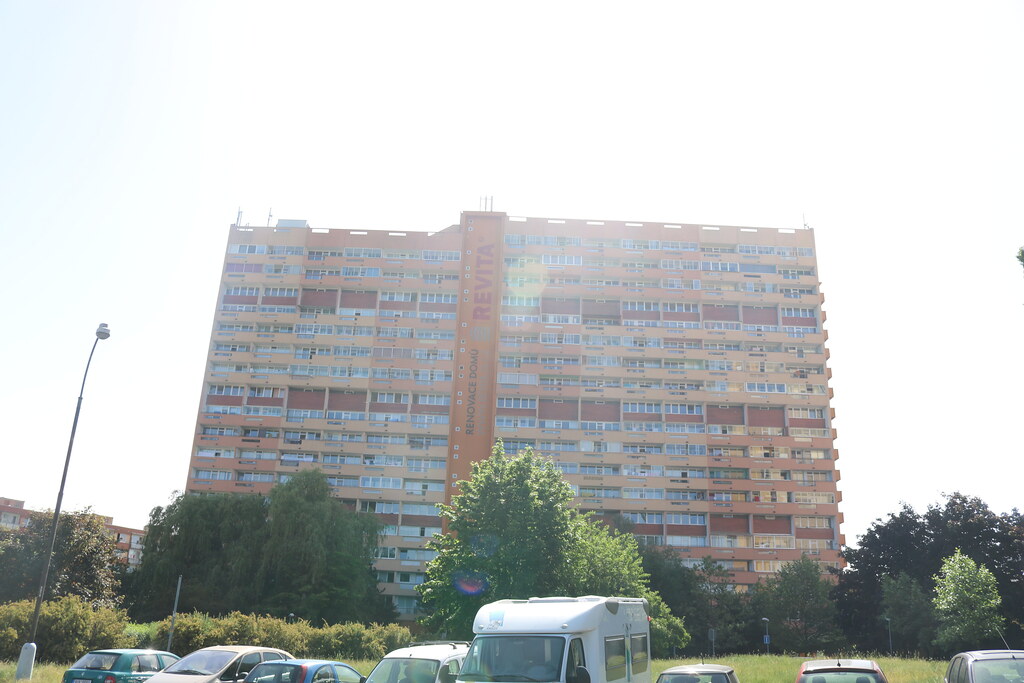
In 1928 Horní Ves (today's northwestern part of the town) was annexed to Chomutov. In connection with the Munich Agreement, the majority German town had to be ceded to Nazi Germany in October 1938, and became part of the Reichsgau Sudetenland (Sudetenland Reich County) and the governmental district of Ústí nad Labem. Chomutov was liberated at the very end of the war, on 8 May 1945, by the Red Army. In the following months the German population was removed from the town. In 1930, over 27,000 Germans lived in Chomutov, i.e. over 80% of the total population. According to the Munich Agreement of 1938, Chomutov became part of the German-occupied Sudetenland, and many Czechs, Jews and German anti-fascists emigrated to the territory of the so-called Second Republic. According to the estimates of the memorialists, at the beginning of May 1945, there were about sixty thousand people living in Chomutov (before the war in 1939 the town had 33,475 inhabitants), of whom about eighty Czechs remained in the town after October 1938. From 8 to 9 May 1945 the town was occupied by a detachment of the Red Army under the command of Major Nosov. The Czech inhabitants of Chomutov, as well as local German anti-fascists and communists, founded a twelve-member Czechoslovak National Committee, of which Josef Černý was elected chairman. The Czechoslovak National Committee was later transformed into the National Revolutionary Committee and all German members were expelled from it. This was later transformed into the Local National Committee. After the essential functions of the town had been made operational, which took until about the end of May, the Chomutov MSK issued a decree that "all Germans must wear a visible white armband on their left sleeve". Moreover, it was punishable for Germans to use the Czechoslovak tricolour and to mark the houses in which they lived with Czechoslovak and red flags. These houses were to continue to be marked with white flags. All streets in the town were renamed with Czech names. On 9 June, a decree was issued according to which 'all male persons of German nationality between the ages of 13 and 65 had to present themselves no later than ten o'clock at the former DFK Chomutov playground near the park. Women, children and old people must not leave their flats." According to the recollections of witnesses, five to eight thousand Germans turned up. They were subsequently expelled by a three-day march on foot, assisted by the army, along the route via Jirkov - Kundratice - Dřínov - Jezeří to Nová Ves v Horách. During the march, several dozen people were allegedly beaten, shot or otherwise lost their lives. The Czech escorts, however, failed to negotiate a crossing into Germany and were therefore all taken to Záluží, where some of them remained until 1946. At the end of May and the beginning of June, an internment centre was established in the former glassworks in Na Moráni Street, where several dozen Germans were killed on the night of 6-7 June. From 2 July, transport trains with the German population began to leave for Germany via Křimov and Reitzenhain. Thus, by 8 September 1945, over fifteen thousand more Germans were removed from Chomutov and the villages in its vicinity in a total of fifteen rail transports. Only a few hundred Germans, mainly anti-fascists and communists, were allowed to remain in Chomutov (on the basis of an individual review of their activities during the occupation). Chomutov was then - like other parts of the Czech borderlands in the post-World War II period - repopulated by newly arrived settlers, the vast majority from the eastern parts of the Czechoslovakia. This also irrevocably changed the overall socio-cultural composition of the town. In the 1960s and 1980s, the town was extensively rebuilt, without significantly affecting the historic core, which has been a city conservation area since 1992. The plan for the construction of housing estates between Chomutov and Jirkov was developed in the 1960s. It was based on the assumption that 95 000 people would live in the Chomutov-Jirkov agglomeration in 1975. It was decided to build the Březenecká and Kamenná housing estates in 1966 and the Zahradní and Písečná housing estates in 1970-1971, although the construction of the latter two was not envisaged until after 1980. In addition to up to 16-storey houses, they were to include a new hospital, a gymnasium, a swimming pool, a retirement home, underground garages and other facilities. In the end, only a cinema and library (demolished during October and November 2012), a football pitch with tennis courts and a shopping centre remained of the grand plans. The Březenecká, Kamenná, Zahradní and Písečná housing estates connect Chomutov with Jirkov as an urban agglomeration with approximately 68,000 inhabitants. The Březenecká and Kamenná housing estates were built between 1970 and 1985. The dominant feature of both housing estates was to be the so-called experimental houses with duplex flats topped with above-ground pillars. In the style of Le Corbusier's concept, it was inspired by the Marseille collective house Unité d'habitation designed by architect Rudolf Bergr. Large time slippages caused by an unusual workflow meant that only 3 of the planned 6 houses were built. They were partially replaced by the construction of three three-part, 13-storey houses on Březenecká Street and the construction of Hutnická Street on the site of the planned retirement home. Contrary to the original plans, which envisaged the start of construction after 1980, the construction of the Zahradní and Písečná housing estates started before 1975. The reason for this was the relatively easy connection to the existing utilities, the hot water pipeline from Komořany, the four-lane section of the I/13 road under construction and the possibility to use the amenities in Jirkov. Therefore, construction started in the neighbourhood of Jirkov and absorbed the small settlements of Keprtovo Pole and Kamenný Lom. After 1990, most of the prefabricated houses in the housing estates were reconstructed and, as part of the project Housing estate - a place to live, several playgrounds were built, pavements were gradually repaired and car parks were expanded. Until 2002, Chomutov was the seat of a district authority, since 1 July 2006 it has been a statutory town headed by a mayor.
Source:https://www.chomutov-mesto.cz/cz/historie-chomutova-praveke-osidleni
Source:https://cs.wikipedia.org/wiki/Chomutov
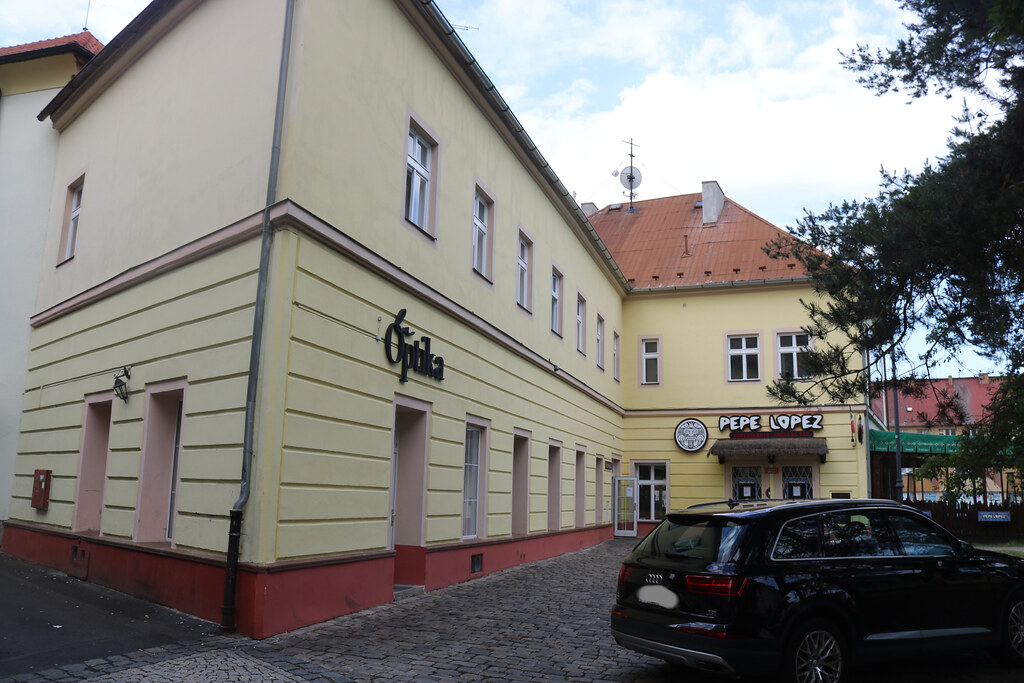
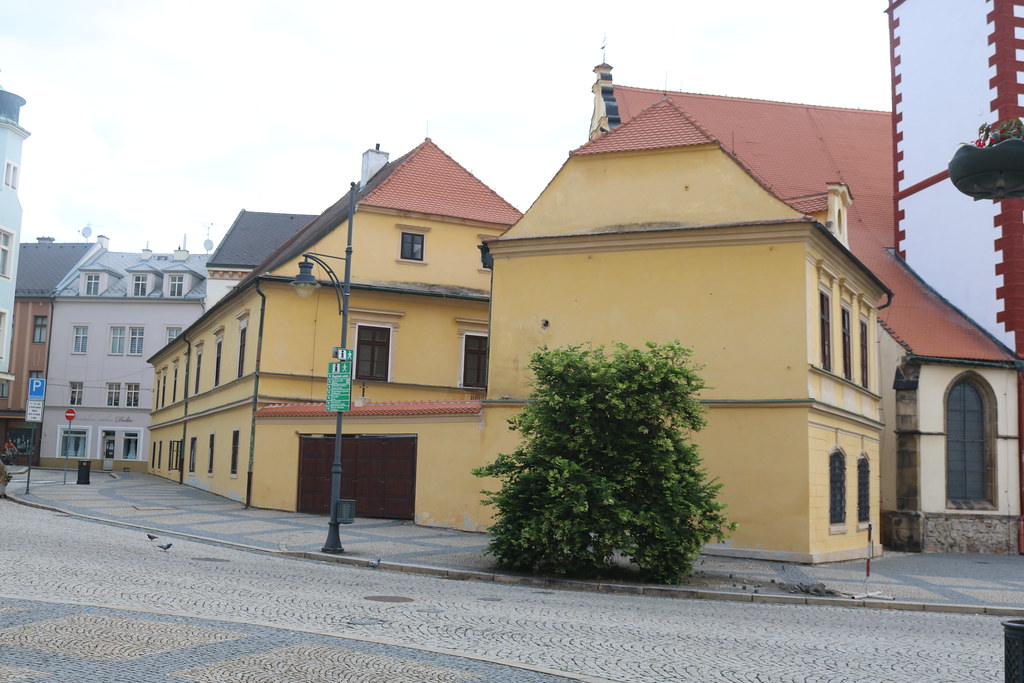
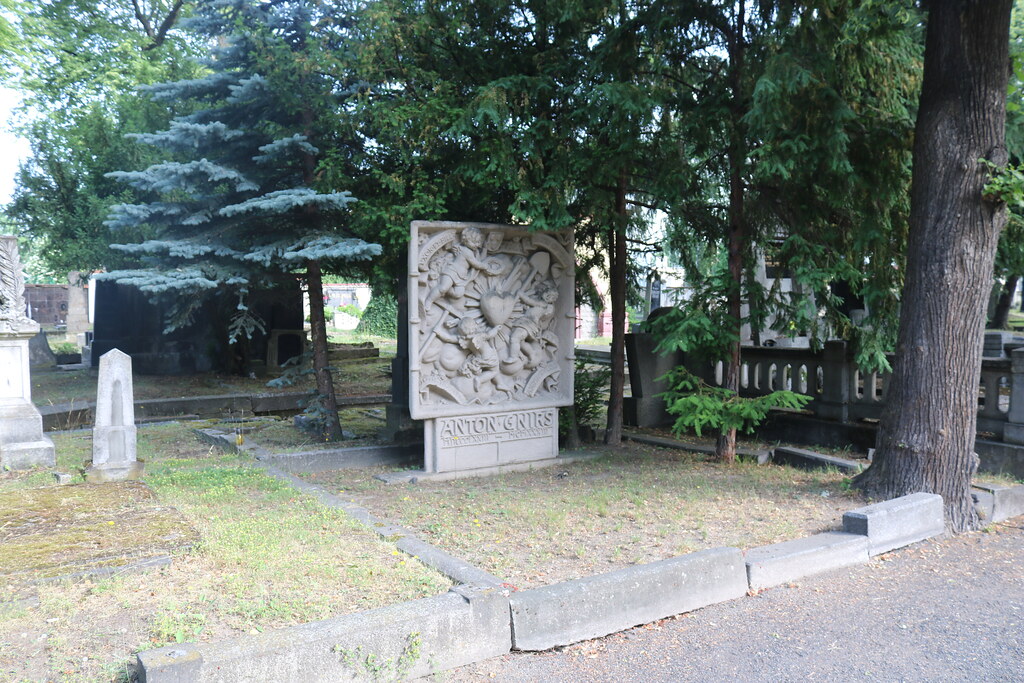
Impressions:A large district town, located in the northeastern edge of the Chomutov district.