Visited:21. 6. 2021
History: In 1588, Jiří Popel of Lobkowice exchanged the Chomutov estate with Bohuslav Jáchym of Lobkowice and decided to introduce Jesuits to Chomutov. Already on 14 February 1589 he received in Chomutov the provincial of the Austrian Jesuit province G. Bader and the rector of the Prague college, Jan Reineel (Joannes Reinelius in Latin). It was then that the first Jesuit sermon took place in Protestant Chomutov. As the patron of the town church, George of Lobkowitz took the church away from the Protestants and the Jesuits consecrated it for Catholic services. The Protestant pastor W. Wagner was expelled. Two Jesuits from the Prague college stayed in Chomutov for a year and carried out considerable activity there. The Jesuit General Claudio Aquaviva SJ approved the establishment of a college in Chomutov, which was to become the centre of Catholic missionary activity, by which the Subcrušnohoří region was to be restored to the Catholic Church. On 29 July 1590, after having previously selected a suitable site for the construction of the college, the Jesuits took charge of the construction. The foundation stone was ceremoniously laid on 14 August 1590 and on 15 June 1591, after prior confirmation by the Pope, the charter of the college was drawn up. The Jesuits received a separate farm for the college and the attached schools. The college was to have ten classrooms, an auditorium, a solemn gymnasium, dormitories, and a seminary (domus pauperum). A special institution was established for one hundred poor students. The St. Ignatius College in Chomutov was even to become the basis for building an independent Jesuit university. On 4 January 1591, Martin Bast was appointed the first rector. The construction of the complex continued. The rector approved all the teachers not only in Chomutov but also on the whole estate. The building of the college met with determined opposition from the local Protestants and the first open conflict occurred on 30 June 1591. At that time, a deceased member of the town council - a Lutheran - was not allowed a public Lutheran funeral. The unrest culminated on 15 July, when the Protestant townspeople captured the church and the Jesuits had to flee secretly in the night as an attack on the dormitory had begun. The Jesuits fled first to Jirkov, then to Červený Hrádek, but due to lack of space they finally took refuge in Libochovice, which was also in the possession of Jiří of Lobkowice. On 19 August 1591, a meeting was held at the house of Jiří of Lobkowice in Červený Hrádek to suppress the open rebellion. The leaders of the rebellion were invited to Červený Hrádek, captured and tried. The so-called bloody court passed two death sentences, which were immediately carried out. The rebels had to surrender all their weapons and the town had to give the Jesuits a glorious welcome. It therefore sent wagons to Libochovice and the next day there was a grand welcome. However, the construction of the college was almost stopped then. Interventions with Emperor Rudolf II in 1595 did not help much. Then the nuncio intervened and only then was the construction slowly resumed. However, when the town burned down in 1598, the building was severely damaged and had to be rebuilt almost completely from the ground up. The founder of the college, George of Lobkowitz, fell into disfavour with Emperor Rudolf II, was arrested and finally executed in Loket in 1606. The confiscated estate and the town were bought by the townspeople themselves. However, the Jesuits remained in Chomutov at this time, although their influence had now declined considerably. Soon disputes broke out between the college and the town (1611) and right at the beginning of the Czech Estates Uprising on 1 June 1618 the Jesuits were expelled from Chomutov and the whole country. In 1621 the Jesuits returned and took over their property. At the same time, in the spirit of the Counter-Reformation, they expanded their activities to the surrounding area. The first rector in this second period of the college's activity was P. Stigelius. The Jesuit missions throughout the Žatec region contributed to the rapid recatholization.
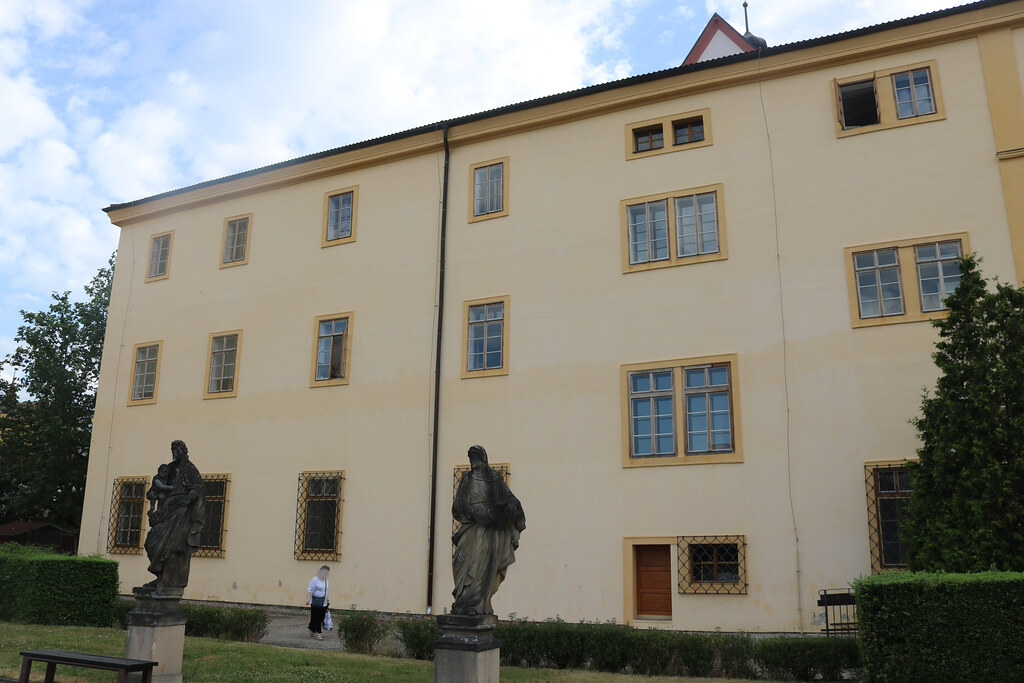
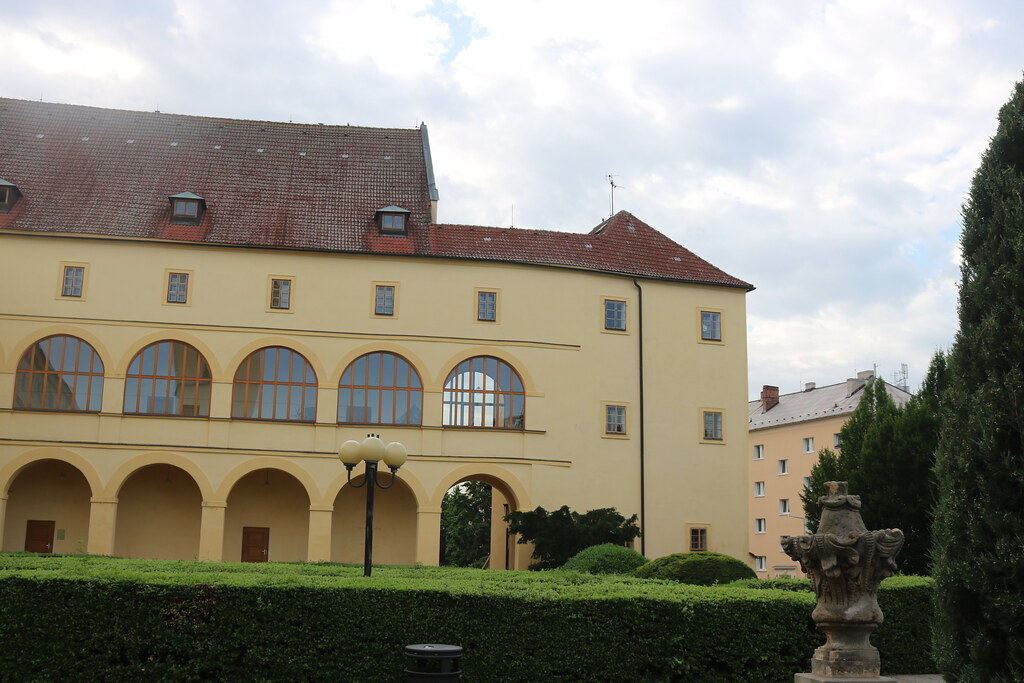
After the Thirty Years' War the construction of the railway could be resumed. The new foundation stone was laid on 3 May 1663 and the entire construction of the Jesuit complex was completed with the consecration of the new Baroque church of St. Ignatius in 1671. In the same year, the construction of the three-storey Baroque Jesuit dormitory, which still survives today, was completed. Jesuit collections were held throughout Central and Western Europe for the construction of the church. The builder was the famous Carlo Lurago. In 1700, the Jesuits established their own summer palace near Chomutov. In 1725, the relics of St. Victor, later the patron saint of Chomutov, were transferred to the Church of St. Ignatius in a great celebration. Cardinal Salerno brought them to Chomutov from Rome. The economic basis of the prosperous college were the estates of Běšice and Nové Sedlo (now defunct villages), which were donated to the school by the Emperor himself in 1623. The college added the farm Velemyšleves and later acquired Brysy. The Jesuits were instrumental in spreading the veneration of the statue of Our Lady of Sorrows in Bohosudov and took care of their sister residence in Krupka (until 1618). In the 17th and 18th centuries, the missionary activity of the Jesuits from Chomutov covered both large regions, Žatec and Loket. When the Jesuits were abolished in 1773, 29 Jesuits lived in the Chomutov college. After the abolition of the order, in 1776 the dormitory began to serve as a barracks for the local garrison and the church became a garrison church. The military garrison served here until 1945 and then the grounds gradually fell into disrepair until the 1970s and 1980s when the grounds were gradually restored and several galleries, a museum and a library were established.
Source:https://www.hrady.cz/klaster-jezuitu-s-kostelem-sv-ignace/
Source:https://cs.wikipedia.org/wiki/Jezuitsk%C3%A1_kolej_(Chomutov)
Source:https://pamatkovykatalog.cz/byvala-jezuitska-kolej-i-13403334
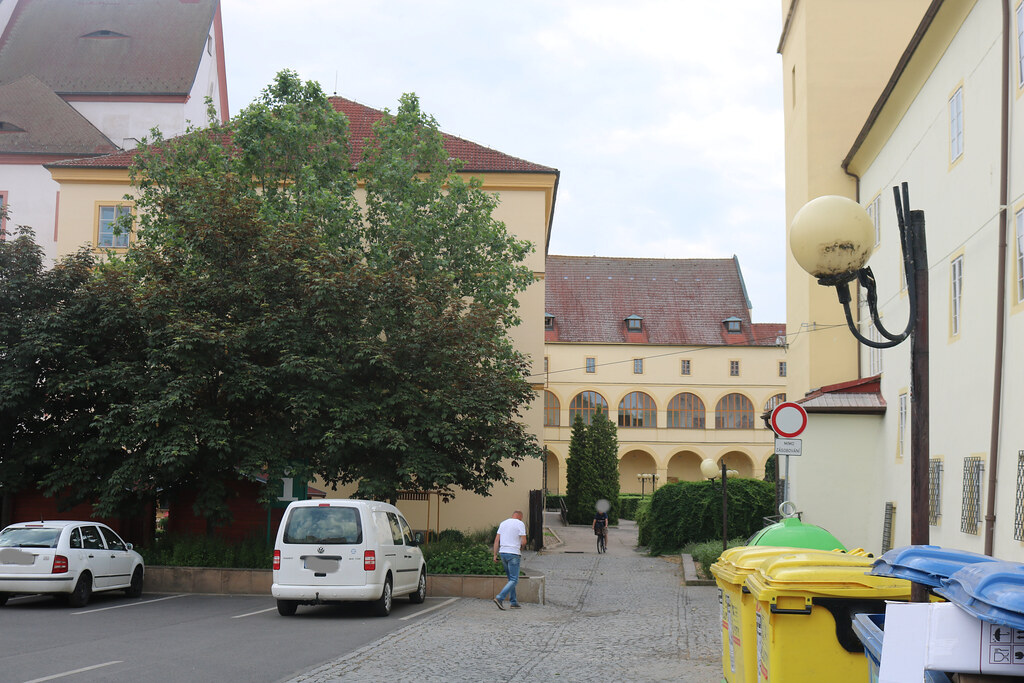
Impressions:A beautiful baroque complex, which is decorated with arcades.