Visited:20. 6. 2021
History:Vysoká Jedle (German: Hohentann) is a small village located about one kilometre north of Místo. The name of the village is a translation of the Middle High German expression zer hohen tanne (by the tall fir tree) or zem hohe tanne (by the tall forest). In historical sources, the name of the village appears in the forms Hohentanne (1367), w hochtanj vsi, Hochtan (1540), ves hohtan otherwise Hohentham (1606), ves Hohenthann (1638) and Hohentann (1787 and 1846). The name Hohentann was used until 1952, when it was officially changed to High Fir. The first written mention of Vysoká Jedle dates back to 1367. Until the seventeenth century, only brief mentions of the village appear in documents, which prove its belonging to the Hassistein estate. It was also part of it in 1606, when the estate was bought by Linhart Štampach of Štampach. The property of the Štampach family was confiscated for their participation in the Estates Uprising. Therefore, in 1623, the village became the property of Jaroslav Bořita of Martinice, who added it to his extensive Ahníkov-Prunéřov estate. A more detailed description of the village is given in the Berni rula from 1654, according to which there were seven peasants and eight cottagers living in the village. Together they owned 25 cows, 44 cows, 37 heifers, ten pigs and sixteen goats. Three years later, the villagers were granted the right of inheritance by Count Maximilian Valentin of Martinice, in return for which their work was extended from thirty to forty days a year. Scheller's Topographie des Königreiches Böhme of 1878 lists only seven houses in Vysoká Jedla, which differs significantly from the estate inventory of 1794, according to which the village had 23 houses and 121 inhabitants. They had to work 573 days in the summer and 481 days in the winter, serve a total of 1092 days of labour with coverings and pay a monetary fee twice a year. Although the village stands at a relatively high altitude, most of the inhabitants were engaged in agriculture, which provided them with food for their own consumption. The only crop they processed and sold was flax. In addition to fields and meadows, the land of each farm included forests, and therefore timber sales were an important source of income. Smaller quartz veins were mined experimentally in the vicinity of the village. Before 1846, the village had 27 houses and 170 inhabitants. After the abolition of the patrimonial administration in the middle of the 19th century, the village became an independent municipality. The production of lace, braids and patches became a new source of income in the 19th century. In 1898, a road from Ahníkov to Celná was built through the village, which provided a good transport link. Ice from the local pond was transported to the butcher's warehouse in Místá. The only services in the village were a tavern and a grocery store. Children went to school in Místá. One of the houses was connected to the water supply as early as 1900, but only because the water supply to the Place ran through his property. Water mains for the entire village and a sewage disposal system were not built until the twentieth century. After World War II, most of the original inhabitants were evicted to Germany. New settlers took their place, but the population still only reached one third of the pre-war number. Thus, while in 1930 there were 121 inhabitants, in 1950 there were only 44 inhabitants, which resulted in the formerly independent village losing its independence and becoming part of the municipality of Místo. During the second half of the twentieth century people gradually left until the village became almost depopulated. According to the 2011 census, there were 28 inhabitants.
Source:https://cs.wikipedia.org/wiki/Vysok%C3%A1_Jedle
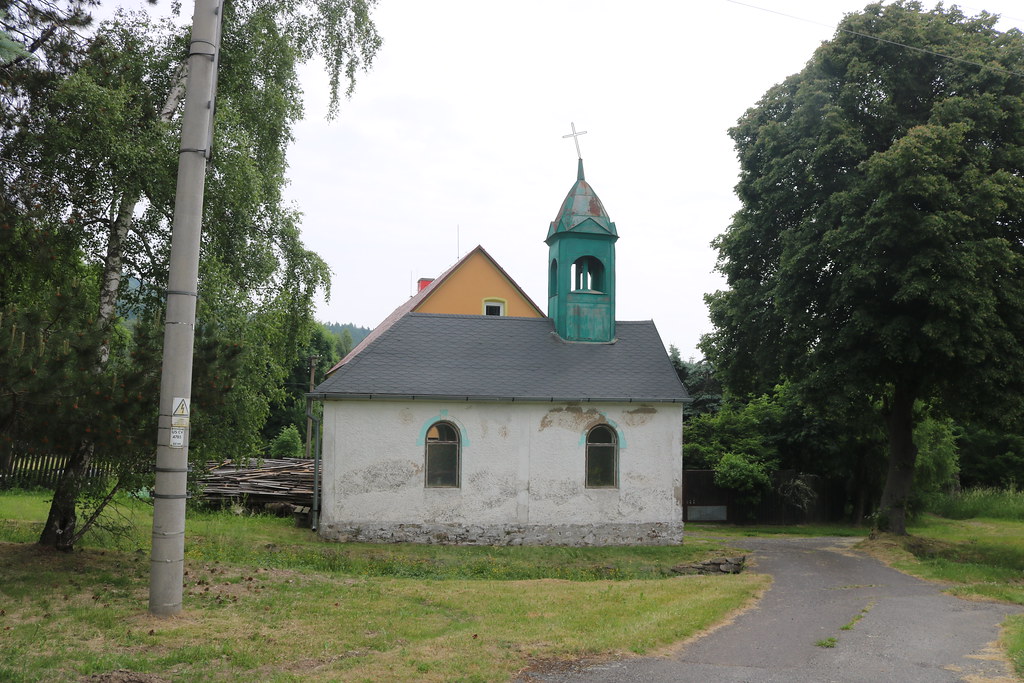
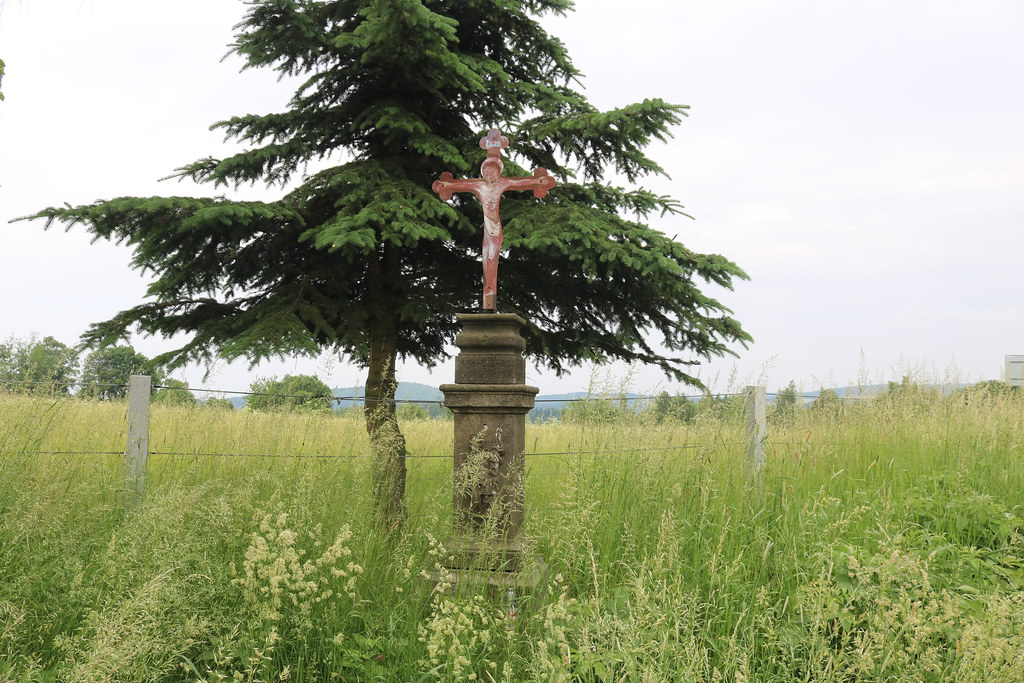
Impressions:A tiny village, located north of the Place, where there are two places of interest.