Visited:13. 9. 2021
History:Hořenec (German: Horschenz) is a small village located about 6 kilometres southeast of Chomutov. The name of the village is derived from the male name Hořen, i.e. the village of Hořenice. However, a possible origin from the word burn is also admitted. In the old documents we can find noble predicates and forms: Bech de Horsenitz (1327), in v Horzinicz (1378), Stephanus de Horzenicz (1388), Horzenicze (1546), Job Šmohar from Rochov na Kralupy a Hořenci (1615). In written sources, Hořenec appears for the first time in 1327 as the seat of Štěpán, František and Bech, members of the vladyc family from Hořenice. Members of the family shared the village and one of its parts was owned by Hodislav of Hořenice, who died in 1384. In 1388 Hořenec is mentioned as the seat of Štěpán of Všechlap. Štěpán and his brother Slavibor were still alive in 1415, but after their death the estate fell to the king. Ladislav Pohrobek granted the estate to Šeptáč of Všechlap in 1454. In the deed of donation the fortress of Horenec is mentioned for the first time. The descendants of Šeptáč, the brothers Bedřich and Vilém, sold Hořenec to Felix Šohař of Rochov in 1535 and had it registered in the land records in 1546. In 1589, Václav Šmohař of Rochov became the owner of the farm. In 1615 Hořenec belonged to the Kralupy manor. It was joined by Job Šmohař of Rochov, but according to Rudolf Anděl, Felix Šmohař had already done so. Job Šmohař had part of his property confiscated for his participation in the Estates Uprising, including the Kralup manor, which was bought by Jaroslav Bořita of Martinice in 1623 and added to the Ahníkov manor. Probably during the Thirty Years' War, the fortress of Horenice, whose location could not be determined, disappeared after the loss of its seat. After the Thirty Years' War, Hořenec changed several owners and in 1655 it is mentioned as a part of the Líčkov estate. In 1714 it was bought together with Nezabylice by the Lichtenstein family and joined the manor of Červený Hrádek. In August 1761, the flooded Chomutovka and Hačka destroyed a total of eighteen houses in Hořenec and Velemyšleves. After the abolition of the patrimonial administration in the mid-19th century, this village became part of the municipality of Nezabylice. Until the beginning of the twentieth century, tanning was made in Hořenec from the bark of young oak trees grown in the surrounding oak groves, which were felled every 8-10 years and continuously renewed. A remnant of this farming is the Hořenec forest about 1 km southeast of the village. After the end of the Second World War, the original population was displaced and resettled from the interior. So while in 1930 there were 354 inhabitants, in 1950 there were only 150. In 1961 the village became part of the municipality of Údlice and in 1991 it became part of the municipality of Nezabylice again. According to the 2011 census, there were 75 inhabitants.
Source:https://cs.wikipedia.org/wiki/Ho%C5%99enec_(Nezabylice)
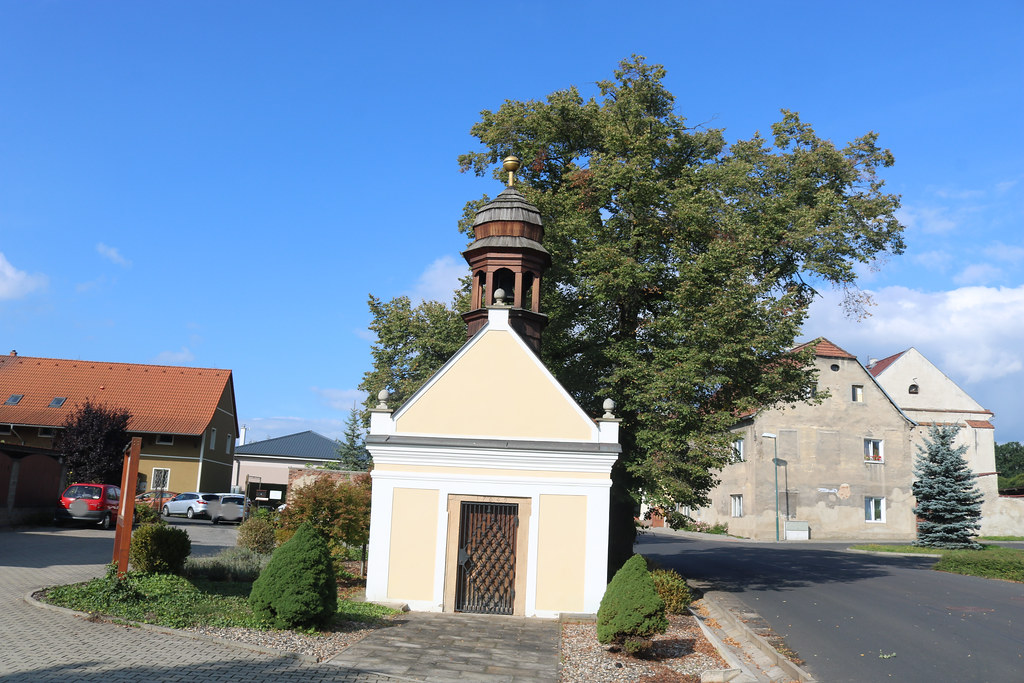
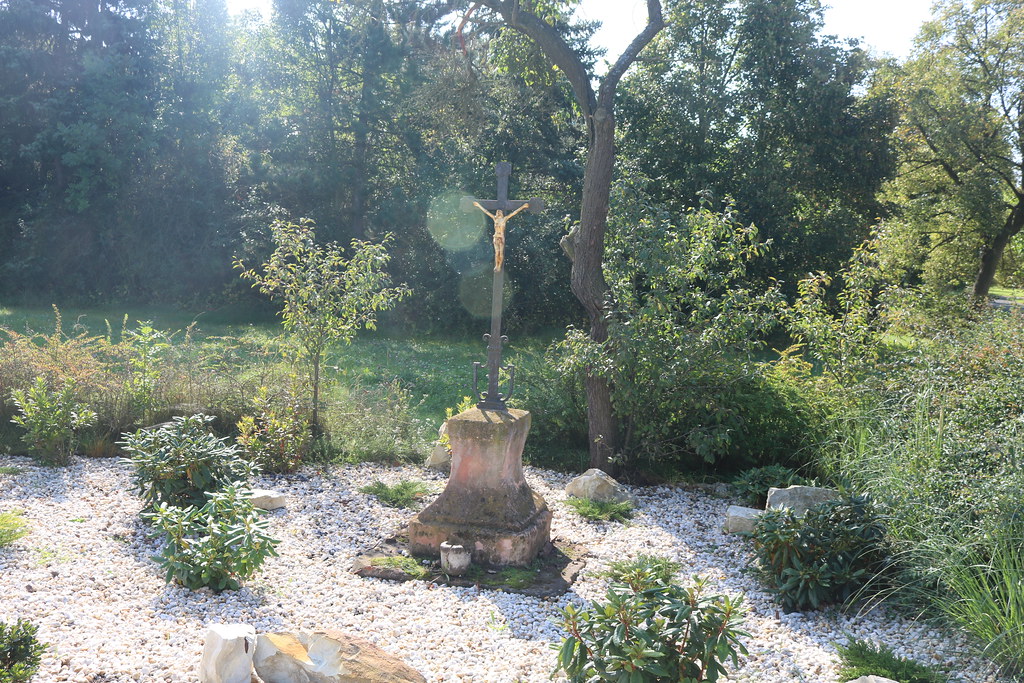
Impressions:A tiny village, located west of Nezabylice, where there are several interesting sights.