Visited:13. 9. 2021
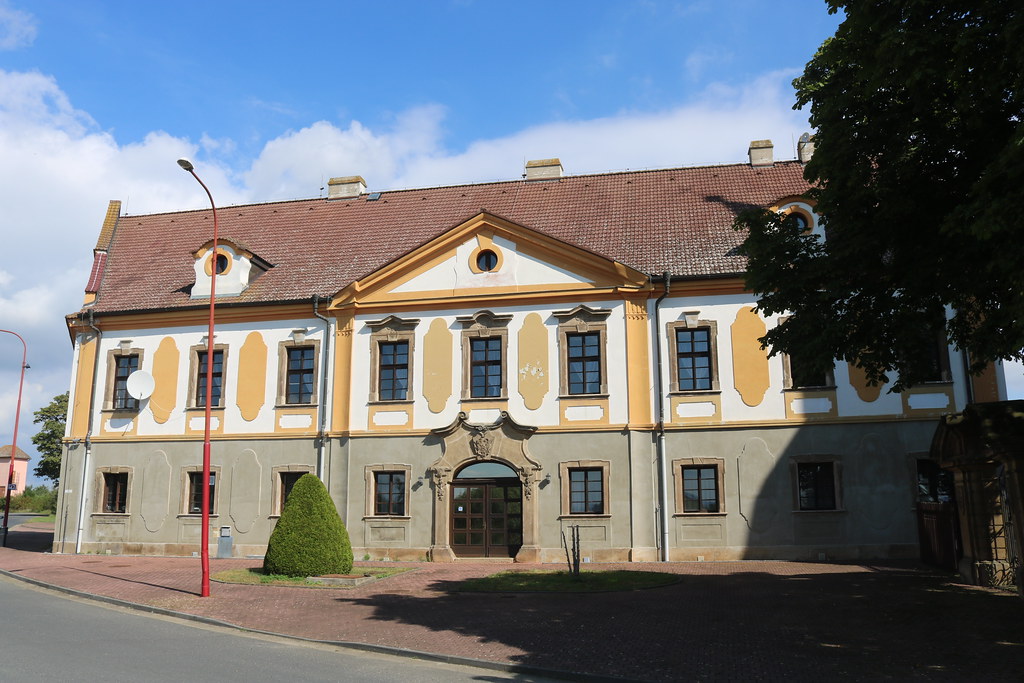
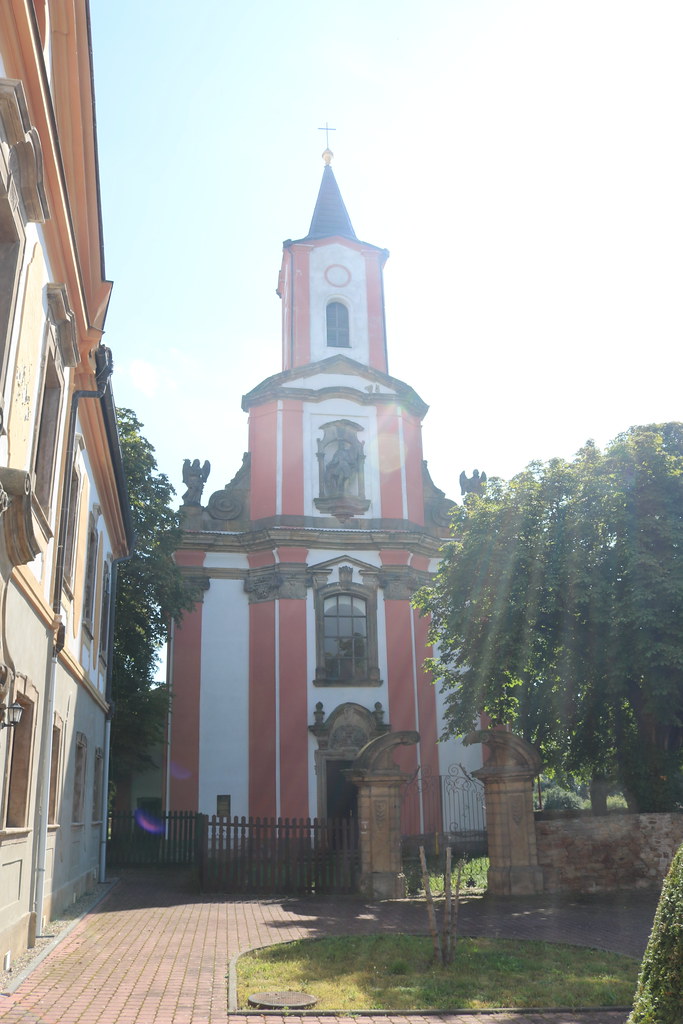
History:Vysočany (German: Wissotschan) is an isolated village, part of the municipality of Hrušovany in the Chomutov district. It is located about two kilometres east of Hrušovany. The name of the village means a village of vysočans, i.e. people who live on a high place. In historical sources the name of the village appears in the following forms: Wissoczan (1209), Wisseczan (1343), Wissooczan (1352), de Wissoczan (1384), in Wissoczan (1387), in Wissoczan (1398), in Wissoczan (1415), Wissoczany (1454), of Wissoczany (1523), in Wissoczany (1571), Wissoczany (1620), Wissoczan and Wissoczan (1787), and Wissoczany or Wischezahn (1848). The area around the village has been inhabited since prehistoric times. In 1994, the foundations of a Neolithic longhouse and a settlement with part of a burial site of the Unetian culture from the earlier Bronze Age were uncovered. A rescue archaeological excavation during the construction of the D7 motorway uncovered a large burial area with the remains of Eneolithic urn graves and skeletal graves of the corded pottery culture. It also captured a fifty-metre-long section of the ditch of a prehistoric roundhouse. Between it and the burial site was the settlement of a culture with funnel-shaped cups. The first written mention of the village dates back to 1209. At the beginning of the thirteenth century, Vysočany and other settlements formed the Škrle farm, which belonged to the Cistercian monastery in Osek. After the Hussite wars and the sacking of the monastery, Emperor Sigismund lent the Škrle farm to Hanus Honinger and his descendants in 1436. Later, Vysočany became a church property again, which was confiscated by the Czech Estates during the Estates Uprising and sold to Bohuslav of Michalovice. However, he was executed for his participation in the uprising as one of the directors in the Old Town Square and his property was confiscated. Vysočany was then returned to the monastery of Osek in 1626 together with the rest of the Škrl estate. The village stood directly on the important trade route from Prague to Leipzig. In later times, the road led directly through the courtyard of the inn No. 12, which was one of the largest and most popular stops of the forman on the road. In wartime, however, the exposed location caused difficulties. During the Thirty Years' War, the area around the village was devastated by passing armies, but the village itself soon recovered thanks to the good management of the Cistercians. According to the 1654 tax rula, some of the farmsteads were deserted, but the farm was still functioning. Thirteen peasants (one of them belonged to the Velemyšleves estate) and three cottagers lived in the village. The peasants who belonged to the Škrl farm owned a total of 45 sheep, 34 cows, 38 heifers, 219 sheep, 115 pigs and thirteen goats. The Velemyšleves farmer had only one coating, kept one cow, fourteen sheep and four pigs. The cottagers, who farmed on smaller plots, had five covers, cows and heifers each, and together they kept fifteen sheep, twelve pigs and one goat. In the first half of the eighteenth century, the Cistercians invited Octavio Broggio to Vysočany, who worked on the construction of the new church of St. Wenceslas in 1728-1738. The sculptors Franz Anton Kuen and his pupil Edmund Jan Richter also collaborated with the order. The passage of armies marked the life of the village even in the nineteenth century. In 1813, wounded soldiers were collected in Vysočany and taken from there to the hospital in Chomutov. During the Prussian-Austrian War in 1866, several hundred soldiers of the Prussian army camped in Vysočany, after whose departure an epidemic of Prussian cholera spread in the village, from which 38 inhabitants died. People in Vysočany also faced natural disasters. In the summer of 1816, the village was hit by a severe hailstorm, which was said to be so strong that it tore the sod from the ground. The Hutná valley became so muddy that it was impossible to graze cattle there for the next two years. In 1834, as a result of heavy rain at harvest time, the Hutná flooded and destroyed the adjacent fields, orchards and hop fields. In 1868, on the other hand, the village suffered a drought in which most of the wells dried up. After the abolition of the patrimonial administration in the mid-19th century, the village became an independent municipality. Outside wartime, however, the village prospered. All crops thrived in the fertile fields and in the eighteenth century much fruit was grown, especially early cherries and apricots. By the late nineteenth century there were two inns, two butchers, two grocers and two fruit shops in the village. In addition to these, there was a bakery, a men's tailor, a building tool business and several other trades. After the Second World War, the Germans were displaced from Czechoslovakia, which reduced the population of the village. While in 1930 there were 266 inhabitants, after the displacement and resettlement of the inhabitants from the interior in 1950 there were 157 inhabitants. Much more drastic in the history of the village was the construction of the ash dump from the Tušimice II power plant, which was to fill the valley between Vysočany, Lažany and Žiželice. With the exception of the rectory and the Church of St. Wenceslas, all the houses were gradually demolished, including the 16th century Gothic cemetery church, and the village officially disappeared in 1980. The church and rectory decayed until 1992, when the municipality of Hrušovany began planning gradual repairs and incorporated both buildings into the grounds of the Vysočany Gardens with a newly built crematorium. Four years later, the ash from the power plant began to be deposited in the excavated areas of the Stodola shaft, and reclamation began on the ash dump. According to the 2011 census, no permanent residents lived there.
Source:https://cs.wikipedia.org/wiki/Vyso%C4%8Dany_(Hru%C5%A1ovany)
Impressions:Formerly a large village, located east of Hrušovany, where a few interesting things have been preserved.