Visited:8. 5. 2020
History: Volyně (German: Wohlau) is a small village located about 4 km south of Výsluní. The name of the village was formed by the possessive suffix yně from the personal name Vol. In historical sources, the name of the village appears in the following forms: Wolaw (1352), Wolow (1405), Wolynye (1431), in Wolyny (1446), Wolyni (1519), w Wolinie (1543), Wohalw (1562) or Wohla (1608). The first written mention of Volynia dates back to 1352, but it is possible that its foundation is related to the colonization activities of George of Milevsko in the second half of the twelfth century. The earliest records of Volyn are connected with the Church of St. Peter and Paul, which, according to art historical analysis, may have stood here as early as the end of the thirteenth century. At the beginning of the fourteenth century, the lords of Šumburk began to build their estates and Volyn was probably one of the villages of their Perštejn dominion. This is proved by the patronage right to the church, which was exercised by Arnošt of Šumburk in the 1770s. In 1431 Aleš and Vilém of Šumburk divided the family property, with Volyně remaining in Aleš's Perštejn estate. In 1546 it was bought from him by the brothers Mikuláš and Jan Hasištejnský of Lobkovice, whose descendants owned Volyně until 1533, when the Šlik family bought it. At that time, the village was already part of the Přísečnické estate, which Lorenz Šlik had to sell to King Ferdinand I in 1545. In the following years Volynia was administered by the royal chamber, but in 1555 it was pledged to Bohuslav Felix Hasištejnský of Lobkowice. At that time, the villages of Třebíška and Úbočí also belonged to the Volyn parish. Both villages also fell under the jurisdiction of the free Volyn town clerk, who was a senior official. His rights included the brewing of beer in quantities that he would sell 'at his own door'. The Lobkowicz family owned Volhynia until 1594, when Emperor Rudolf II confiscated it, along with the rest of the property of Jiří Popel of Lobkowicz, for treason. At the beginning of the seventeenth century, Volyně with 21 subjects was valued at 1012 kopeks and 47 groschen. During the Thirty Years' War the village fell into ruin, but was soon rebuilt. According to the 1654 tax rule, there was one peasant, 21 cottagers and six gardeners. The peasant owned three covers and kept six cows, five heifers and three goats. According to the right to brew beer, he probably held the office of a saloon keeper. The cottagers had a total of 25 covers, 29 cows, 45 heifers, 38 goats, three sheep and six pigs. Rye was grown on the stony fields, but the main source of livelihood was cattle breeding, forest work and carting. In the second half of the seventeenth century there was also a school in the village, but the first school building was not built until 1690. Until 1878, children from Třebíška and Úbočí also attended the Volyn school. The Theresian cadastre of 1748 lists a mill with one wheel on unstable water in the village. The Volyn fast was acquired by the royal chamber in 1799 at the latest, which sold off its land and the building became an inn. In 1709 and 1710, magnetite was mined in the Petr a Pavel mine near Volyn and the ore was transported to the Perštejn ironworks. Mining of the deposit was resumed between 1824 and 1827, when about 300 tonnes of ore were extracted. A later attempt at further restoration was unsuccessful. Limestone was also mined near the village until 1848. During the Napoleonic wars, Prussian, Russian and Austrian troops passed through the Erzgebirge on the local roads in 1813, and their soldiers brought contagious diseases to the village, from which many people died. By the end of the nineteenth century the village was prosperous. In 1880 the Volunteer Firemen's Association was founded, a new school was built four years later, a new cemetery was established in 1893 and the road to Rusova, built in 1896-1897, improved transport links. After the abolition of the patrimonial administration in the middle of the 19th century, the village became an independent municipality. During the First Republic, the Volyn school had two classes and there was a sawmill near the village where beams, planks and laths were produced. The only direct military action of World War II that touched Volyn was the shooting down of a British bomber plane, some of whose crew died and were buried in the village cemetery. Later, the remains of the airmen were transferred to the Olšany Cemetery in Prague. After the war, the Germans were displaced from Czechoslovakia and the village gradually became depopulated and turned into a holiday village. While in 1930 there were still 331 inhabitants, after the displacement and resettlement from the interior, in 1950 there were 70 inhabitants, which resulted in the village losing its independence and becoming part of the town of Výsluní. Most of the original houses were demolished and the village gradually became depopulated and by 1980 there were no permanent residents. New permanent inhabitants did not move into the village until the beginning of the 21st century. According to the 2011 census, there were 58 inhabitants.
Source:https://cs.wikipedia.org/wiki/Volyn%C4%9B_(V%C3%BDslun%C3%AD)
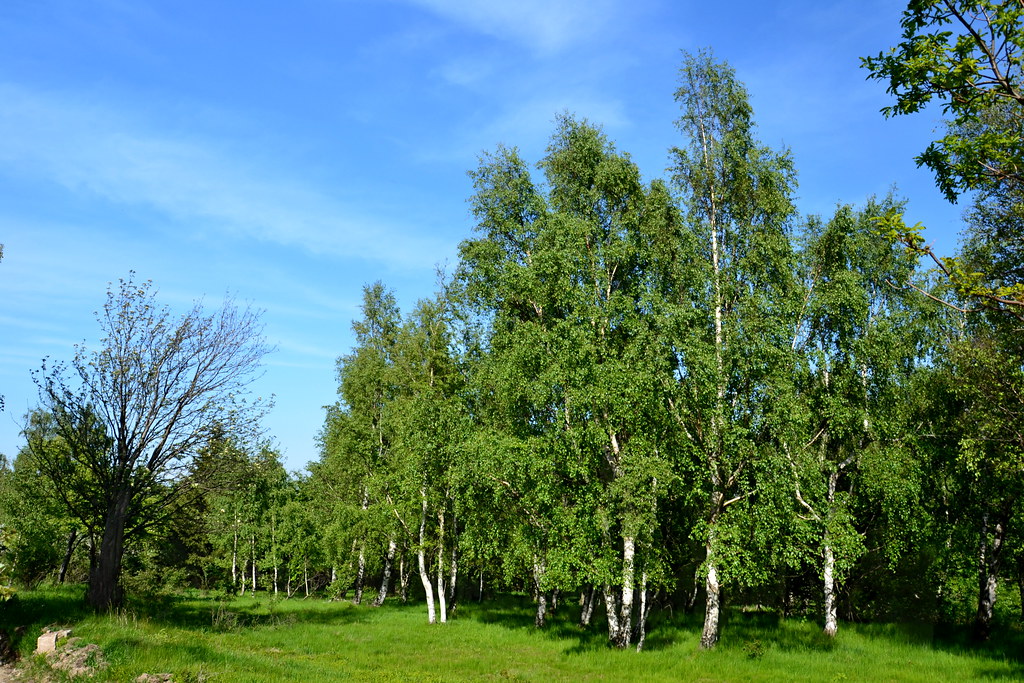
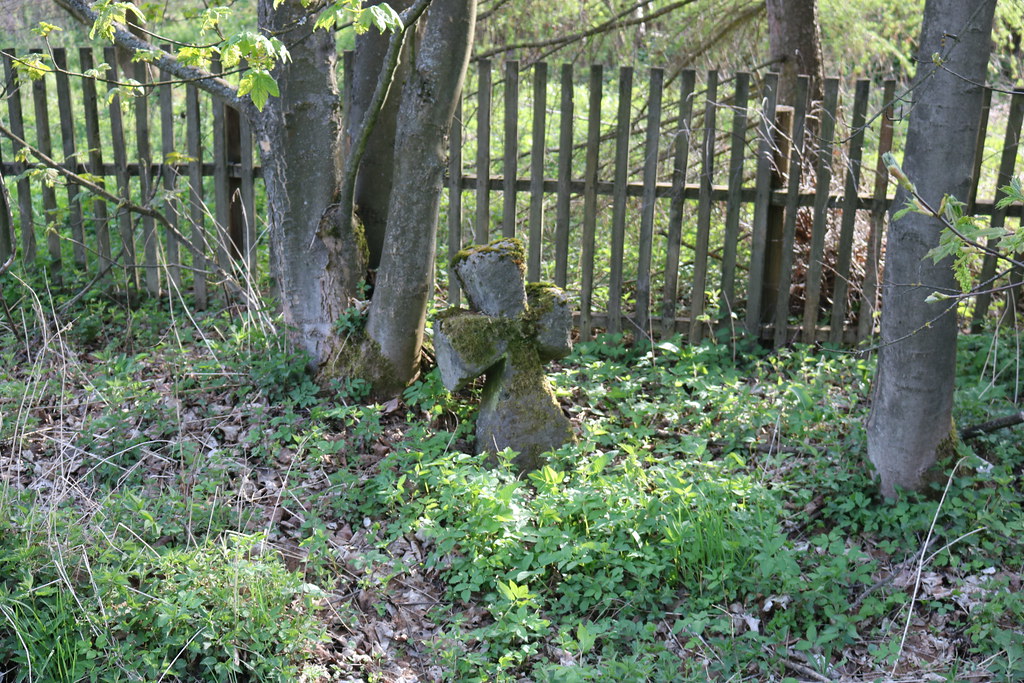
Impressions:A tiny village, located south of Výsluní, where there are several interesting sights.