Visited:14. 9. 2021
History:Vojnín (German: Wohnung) is a small village located about 3.5 km southwest of Radonice. The name of the village is derived from the personal name Vojna meaning Vojn's court. In historical sources, the name of the village appears in the following forms: de Woynyna (1383), Woynyn (1386), in Wogeninye (1400), de Woynina or of Woynina (1436), of Woynina (1545), Wohnüngk (1654) or Wohnung (1787).The first written mention of the village dates back to 1383, when it belonged to Majnus of Woynina. In 1400, the village was acquired from King Wenceslaus IV by Pelhřim of Nahořečice, who still held it in 1403. Shortly afterwards, the village was apparently acquired by Chotek, who gave half of the village to his wife around 1420. He was also the founder of the Chotek family of Vojnín, which, however, had nothing to do with the Chotek family of Chotek, who were also sometimes written from Vojnín. The Chotks built a Gothic fortress in Vojnín. In 1447 a part of Radechov also belonged to the Vojnín manor. In 1535 or 1547, Albrecht Šlik bought the estate, which included parts of the villages Dobřenec, Rohozec, Sedlec Vidolice and Radechov, in addition to the fortress and the ash yard, and annexed them to Vintířov. Vintířov belonged to the Šlik family until 1612, when it was inherited by Jindřich Matyáš Thurn, who as a commander of the Estates' army and one of the directors took part in the Estates' uprising. After the lost battle on the White Mountain his property was confiscated, but Vintířov was regained by his wife. He remained a soldier at the Vintířov estate until the abolition of serfdom. After the Thirty Years' War there were three peasants, two cottagers and one family without land in the village according to the tax roll. The peasants had two covers and kept three cows, three heifers and three pigs, while the cottagers had only one cow, one heifer and five pigs. One of the peasants worked as a blacksmith and one cottager was a carpenter. There used to be three ponds near the village, but later two of them were drained and converted into fields. As early as 1664 it is mentioned that this fortress was inhabited and in the 18th century the fortress was newly roofed. According to the Topographie des Königreiches Böhmen of 1787 by Jaroslav Schaller, there were thirteen houses in the village, while Johann Gottfried Sommer lists fourteen houses with 83 inhabitants in 1846. In addition to these, there was a yard with the ruins of a fortress, a mill and a sheepfold. During the second half of the 19th century the fortress was gradually dismantled for building materials. After the abolition of the patrimonial administration, the village became part of the Rohozec municipality. According to the description from 1863, the village had only seven houses. Rye, barley and, to a lesser extent, wheat and oats were grown in the fields. Grain cultivation was supplemented by peas, lentils, potatoes and orchards. There were 264 sheep in the sheepfold, but the village also had fifteen oxen, 31 cows, 43 calves, eight horses, three goats and 26 pigs. There were two inns in the village, a brickyard, where lime was burnt in addition to bricks, and a hulan riding school nearby. The farmstead remained in the ownership of the Lobkowicz family even after the abolition of serfdom, and during the First Republic it was acquired by marriage by the Thurn-Taxis family, who cancelled the leases of the peasants and began to manage their land themselves. There was a volunteer fire brigade in the village, who acquired a fire engine at the beginning of the twentieth century and built a firehouse in 1922. After the end of World War II, the original population was displaced, so that while in 1930 there were 105 inhabitants, by 1950 there were only 48. V 50. In the 1920s, the rest of the fortress and the outhouse were razed to the ground and the fortress disappeared. In 1961 the village became part of the municipality of Vintířov and then in 1976 it became part of the municipality of Radonice, where it belongs to the present day. According to the 2011 census there were 5 inhabitants.
Source:https://cs.wikipedia.org/wiki/Vojn%C3%ADn
Source:Artistic Monuments of Bohemia - Emanuel Poche
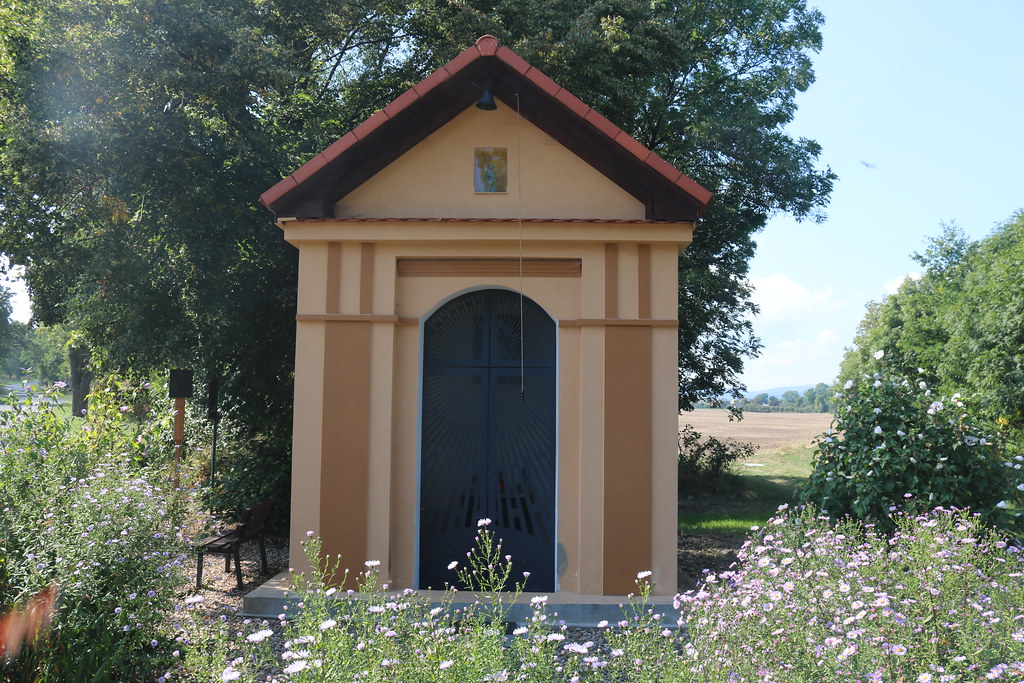
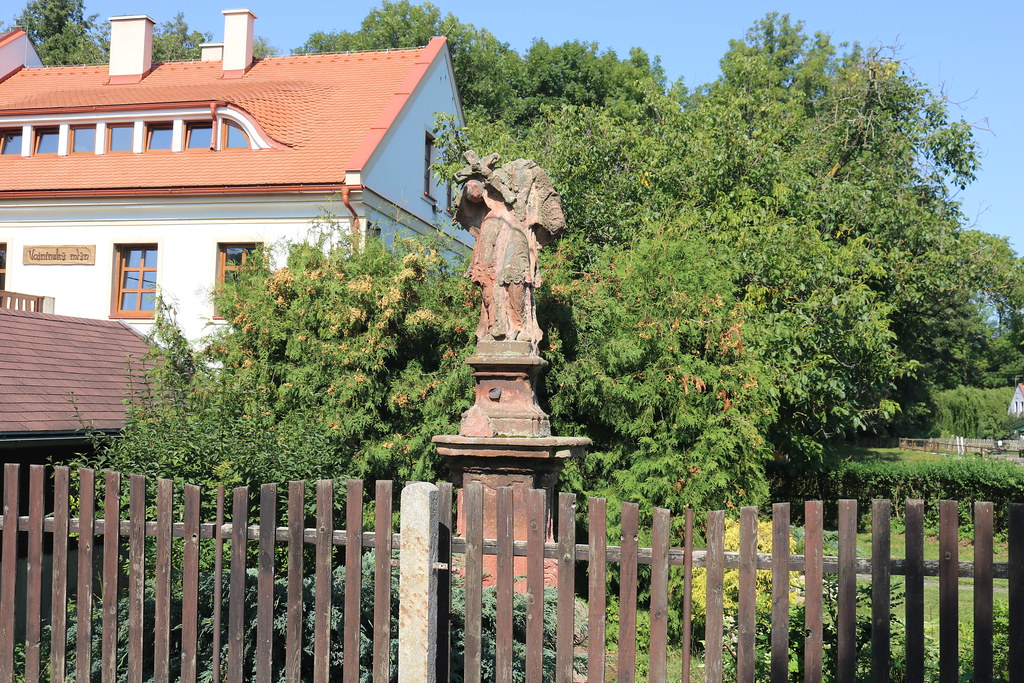
Impressions:A small village, located southwest of Radonice, where there are two places of interest.