Visited:13. 9. 2021
History:Poláky (German: Pohlig) is a village located about 8 kilometres southeast of Kadan. The name of the village is derived from the name Polák, meaning settlement of the Polák family, or from the people from Poland who settled there. In historical sources, the name of the village appears in the following forms: de Polek (1318), Polak (1400), z Polák (1475), na Polák (1483), Polaky (1542 and 1546), Puhlik (1577), Polaky (1589), Pullig (1608), Polaky (1629), Pohlig or Pohlich and Polik (1787) and Pohlig or Poljk (1846). The territory of the Poles in the twelfth century belonged to the Waldensian monastery, which is said to have established one of its farmyards, the so-called grange. The first written mention of the village dates back to 1318, when it belonged to Vlk and Bavor of the Poles. The Poles of Polák kept the village divided into two estates until the 1620s. Members of the family included, for example, Vlad of Polák, imprisoned in 1404-1407 in the fortress of Pětipes, or Markéta, who in 1455 sued for the dowry in Vidolice with Chotek of Vojnín. The next owners of Polák were the Mašt'ovský family from Kolovrat, who built a fortress there. In addition to the village, the manor also included a courtyard and two other villages. Jan Žďárský of Žďár bought the estate from the Kolovrats in 1546 and his son Žibřid sold it to Felix Hasištejnský of Lobkovice in 1552. After his death, his sister Barbora inherited the Poles and in 1557 her property was acquired by Václav Lobkovic of Duchcov, from whom Bohuslav Hasištejnský of Lobkovice bought it three years later. His wife Anna of Fictum and Egerberg was given the use of the Poles, but eventually Bohuslav's son Jan Valdemar inherited them. In 1589 the estate was acquired by Jan the Elder of Lobkowice and after him by his brother Ladislav of Lobkowice na Zbiroh. He and his brother Jiří Popel of Lobkovice fell into disfavour with Emperor Rudolf II and fled the country in 1593. His property was confiscated by the royal chamber, but since a substantial part of Ladislaus' property came from the dowry of his wife Magdalena of Salm, her other estates were returned to her by the Poles. Magdalena sold them in 1596 to Linhart Štampach of Štampach in Ahnik. After Linhart's death, the Poles were inherited by his son Jan Rejchart Štampach of Štampach, who married Anna Kaplířová of Sulevice. A son Zdeslav was born to them, but Jan Rejchart died soon afterwards, and his uncle Matyáš Štampach of Štampach administered the estate for the minor Zdeslav. The latter took part in the Estates Uprising, for which he was sentenced to lose two-thirds of his property. However, Zdeslav proved that he did not take part in the uprising and the Poles were returned to him along with the nearby Libouš. As an evangelical, however, he sold the estate to Henry Šlik in 1628 and left the country. According to the purchase contract, the villages of Dolany, Drahonice, Lomazice, Chotěnice and part of Hořenice belonged to the Poles. Jindřich gave the Poles as a dowry to his daughter Maria Sidonia, married to Count Otto of Friedberg and Trauburg. Maria Sidonia left the administration of the estate to her husband, but later sued him for the property. The dispute was decided by Emperor Leopold I, who ruled that Otto had to return the property and reimburse his wife for damages and expenses.
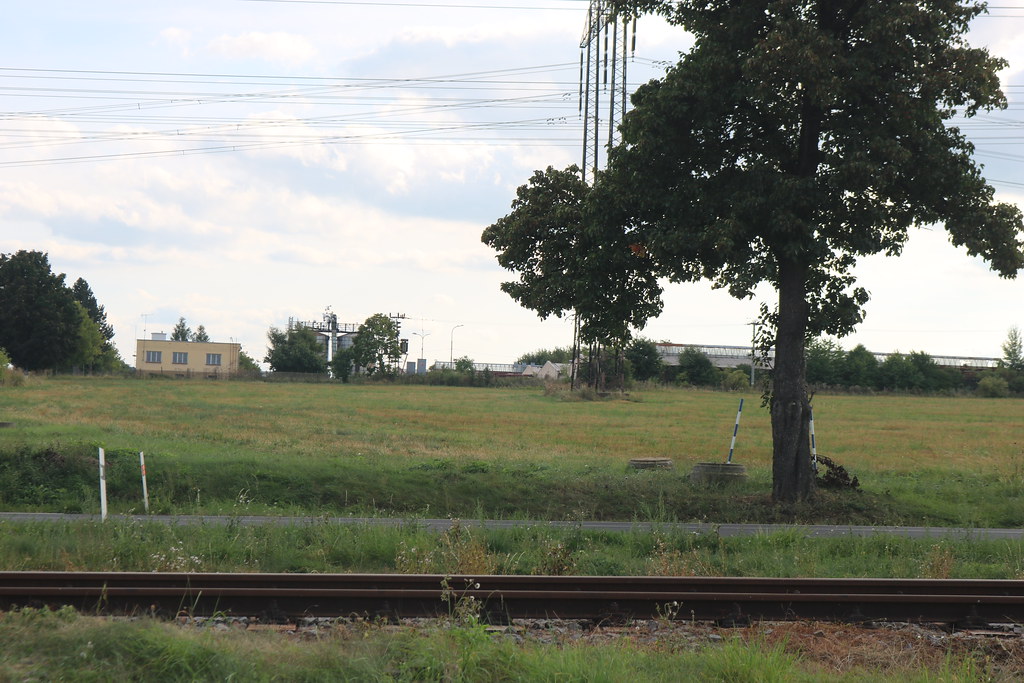
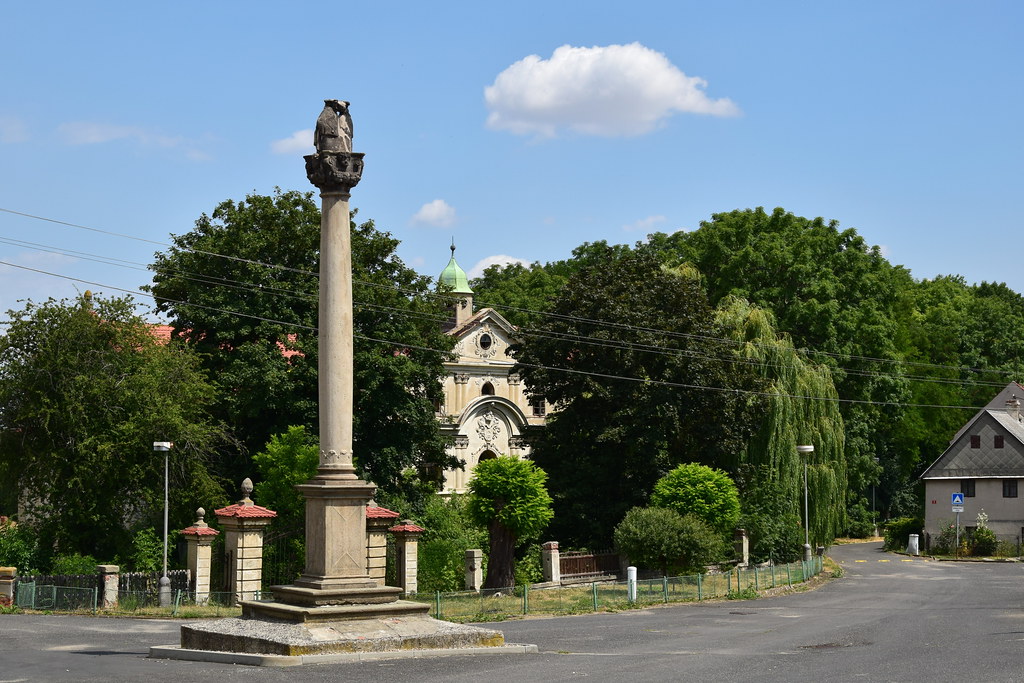
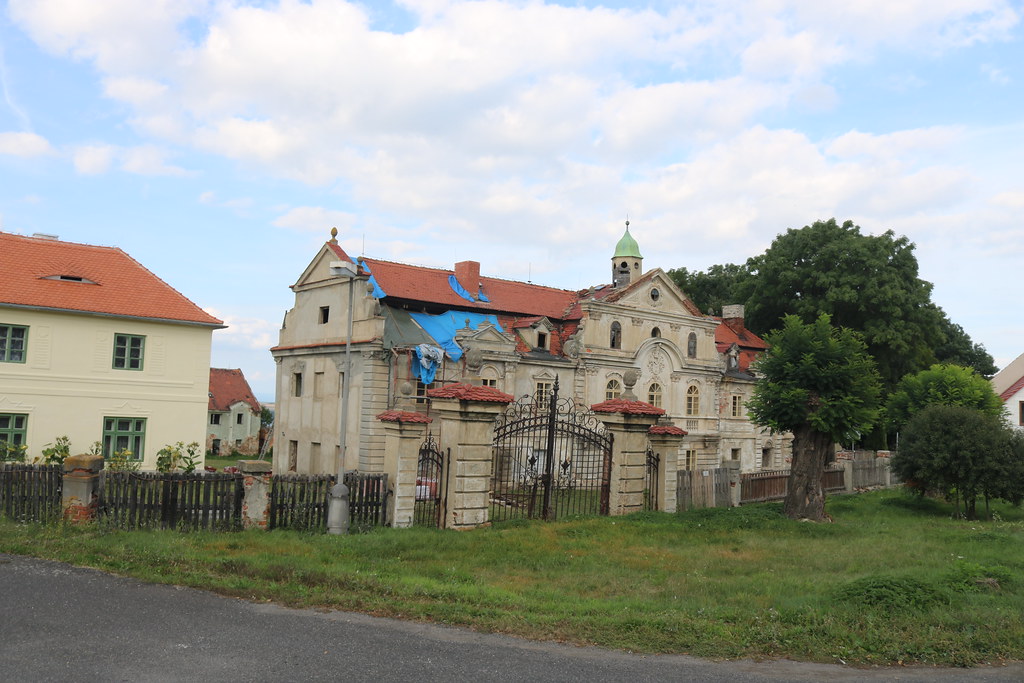
During the Thirty Years' War, the fortress disappeared. The tax roll from 1654 evaluated the village well. According to it, there were four peasants, three cottagers and one man without land who worked as a blacksmith. The peasants kept ten cows, ten heifers, 51 sheep and 34 pigs. The poorer cottagers owned only six cows, three heifers, sixteen sheep and twelve pigs. One of them was a butcher and the other ran a butcher's shop. Cattle were also kept by a blacksmith who had a cow, four sheep and a goat. Apart from cattle breeding, the main source of livelihood was wheat and rye farming, but there was also a brewery, which brewed six barrels of beer a year. The other owners of the village changed frequently. These included the Strojetice family, Count Gustaf Adolf of Warmsbach and the Counts of Questenberg. Between 1745 and 1815 the farm belonged to the Counts of Pergen, who built a late Baroque castle on the site of the old fortress at the end of the 18th century. According to the Theresian cadastre, the estate included the nearby villages of Hořenice, Dolany, Lomazice, Malé Krhovice, Drahonice, Chotěnice, Přezetice and the more distant Korunní and Kamenec. In Poláky, a blacksmith, a butcher, a wheelwright and a weaver worked as craftsmen. The Windischgrätz family was the last noble family to own the estate before the abolition of serfdom, but in 1868 the local manor with 428 hectares of land was bought by Ferdinand Josef of Lobkowitz. After the abolition of the patrimonial administration in the middle of the 19th century, the village became an independent municipality. At the turn of the eighteenth and nineteenth centuries, small lignite mines began to be mined in the area. In the second quarter of the 19th century, the P. Maier mine was opened right next to the village, but the much larger Alois mine near Hořenice also extended into the cadastral area of the village. At the same time, fruit growing was also spreading in the area. In 1919 a chapel was built in the village square, part of which served as a fire station. During the land reform, the Lobkovice farm was reduced by only 39 hectares and the remaining large land was bought by R. Hrbáček-Hradčovský in 1924. There used to be a German school in the village, and on 5 January 1925 a Czech small-class school was opened in its gymnasium. In the same year, the village was connected to the distribution network of the Lomazice power plant. After the Second World War, the original inhabitants were evicted and the allocation of their property was managed by the local administrative commission, which allocated it to the inhabitants from the interior. Thus, while in 1930 there were 194 inhabitants, in 1950 there were only 115 inhabitants. The school was not rebuilt after the war and the children went first to Dolany and then to Kadana after the flooding of the Nechranice dam. A state farm was established here, which in 1960 took over the management of the unified agricultural cooperative in Chbany, with which the cooperatives in Roztyly and Přeskaky had already merged. In 1961, the village lost its independence and became part of the municipality of Chbany, where it still belongs today. From 4 August 1958 to 1968, the village was a prison for 300 men who were to work in agriculture. After the prison was closed down, its premises were used by the military garrison, which moved to new buildings under the dam at Nechranice after the construction of the Nechranice reservoir. Later, the state farm established a warehouse and a kitchen with a canteen in part of the buildings. After 1990, a private owner ran the cookhouse for a short time, but it remained unused. In the 1960s, the state farm built seven houses for its employees and in 1973 completed the construction of four apartment buildings with six apartments each. The administration of the farm was housed in the chateau, where its archives were also established. In 1977, the farm opened a new mixed goods shop and in the same year completed the construction of a large-scale cowshed to the south of the village. Two years later, the farm established a branch agricultural construction plant, which built okál-type dwellings in Mašt'ov and Hradec, modified a poultry farm in Černýš and built a piglet farrowing house in Vintířov. After 1990, the cowshed and the construction plant were proposed for a second round of privatisation, but the privatisation of the cowshed was not successful and the cowshed was without use around 2000. At the same time, the village had a shop, a post office branch, a restaurant, a sewage treatment plant and a railway station. According to the 2011 census there were 142 inhabitants.
Source:https://cs.wikipedia.org/wiki/Pol%C3%A1ky
Impressions:A large village, located southeast of Kadana, where there are several attractions.