City coat of arms:

Visited:22. 6. 2021
History:Křimov (German: Krima) is a village located about 8 km northwest of Chomutov. The name of the village is derived from the personal name Křima meaning Křim's Court. In historical sources, the name appears in the forms Krimove (1281), Crymau (1352), Crimaw (1361), Crymow (1363), Kreymaw (1412), Crimow (1434), Krzimow (1571), Kryma (1595) or Krima (1787). Krimov is one of the oldest settlements in the Chomutov part of the Ore Mountains. Archaeological evidence shows that the village was founded at the turn of the twelfth and thirteenth centuries. It was founded on an important trade route mentioned as early as the middle of the twelfth century, which connected the Chomutov region with Saxony. The road had several branches, one of which led from Chomutov and the other from Kadana via Vysoká. From Křimov it continued via Reitzenhain to Wolkenstein. The first written mention of the village dates back to 1281. It can be found in a deed in which Chotěbor of Račice and his wife bequeathed the village in the so-called Křimov district to the Order of German Knights of the Chomutov Commandery. Besides Křimov, these were Stráž, Strážky, Nebovazy, Suchdol, Menhartice, Lideň, Vysoká and the formerly defunct Hoděvice. In the fourteenth century, part of the village came into the possession of the Lords of Alamsdorf, who resided in the castle of Najštejn, but they also owned other villages in the vicinity and probably also the Hausberk castle. In 1363, they had the altar of St. Erasmus built in the church in March and part of the money came from their Křimov property. The village was administered by magistrates. Among other facilities, the tavern, which stood in the immediate vicinity of the church, was also a tavern. In 1411, King Václav IV took advantage of the weakening of the order and confiscated most of its property. However, Křimov remained part of the Chomutov estate, which was initially held by a number of pledge holders. The last noble owner was Jiří Popel of Lobkovice, whose property was confiscated in 1594 by Emperor Rudolf II. Chomutov then bought itself out of serfdom in 1605 and at the same time bought eleven villages, including Křimov. At that time there were 23 serfs who had to share the salary of the rector of the Jesuit college in Chomutov. During the Thirty Years' War, Křimov suffered from repeated passages of troops. According to the tax ruly from 1654, nine peasants, six cottagers and six craftsmen (weavers and weavers) lived there after the end of the war. They grew rye and together had 29 covers, over 200 cows and other livestock. One of the peasants ran a tavern. Formancy was an important source of income. One hundred years later, in 1748, there was a two-wheeled mill in the village, with a blacksmith, a tailor, a weaver, several tanners and a foreman. A free farm evolved from the farmstead and the village was administered by officials from the town farm in Krásná Lípa. However, the village continued to be damaged by troops passing through the village, for example in 1778 or 1813, when a military and prison camp for 900 Frenchmen was established here. After the abolition of the patrimonial administration in the mid-19th century, the village became an independent municipality and has maintained its independence until the present day. In addition to farming and farming, the people earned their living by trading in timber and making homemade tile and, later, by processing flax, the cultivation of which became widespread at the end of the 19th century. In 1894 a flax-growing society was formed and a flax processing factory was built south-west of the village. As late as 1930, a total of 407 inhabitants were listed. At the end of the Second World War, a death march from Reitzenhain to Chomutov passed through the village in April 1945. Its victims were buried in a total of twelve common graves, two of which with a total of 31 dead were in Křimov. After the Second World War, the original inhabitants were displaced and the population of the village declined sharply, with only 156 inhabitants mentioned in 1950, most of whom were settlers from the interior. Subsequently, the population declined. After 1989, a water and sewage system was built. Some of the inhabitants work in agriculture, but most people commute to Chomutov for work or are unemployed. Before the construction of the bypass there were several markets and prostitution was developing. In 2001, a total of 49 inhabitants are mentioned here, but then the village started to grow again, and in 2021, 421 inhabitants are mentioned here.
Source:https://cs.wikipedia.org/wiki/K%C5%99imov
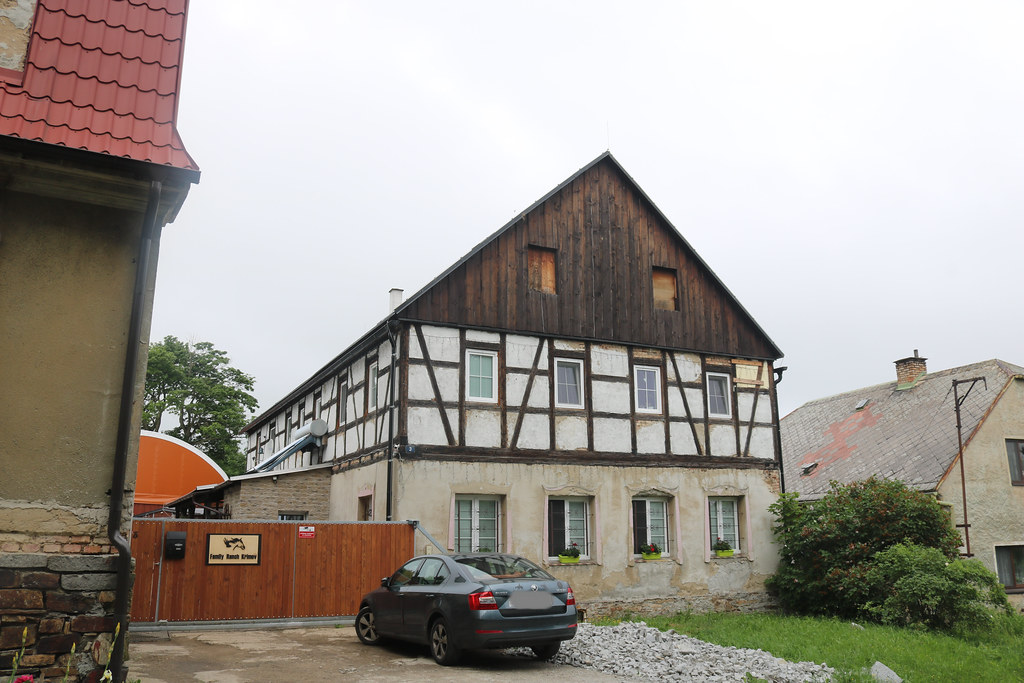
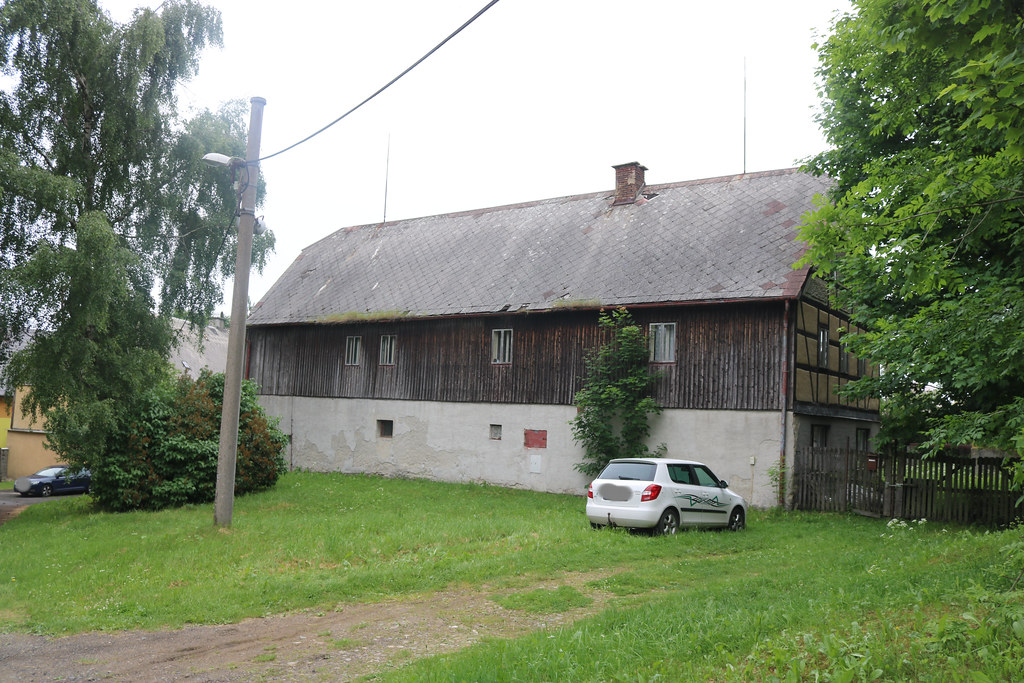
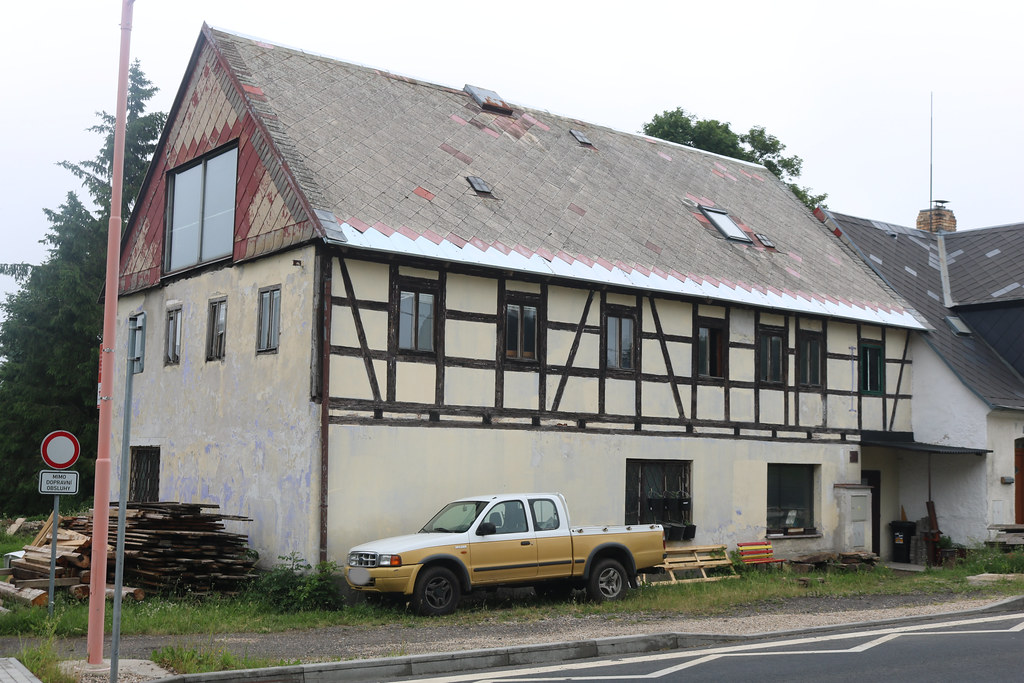
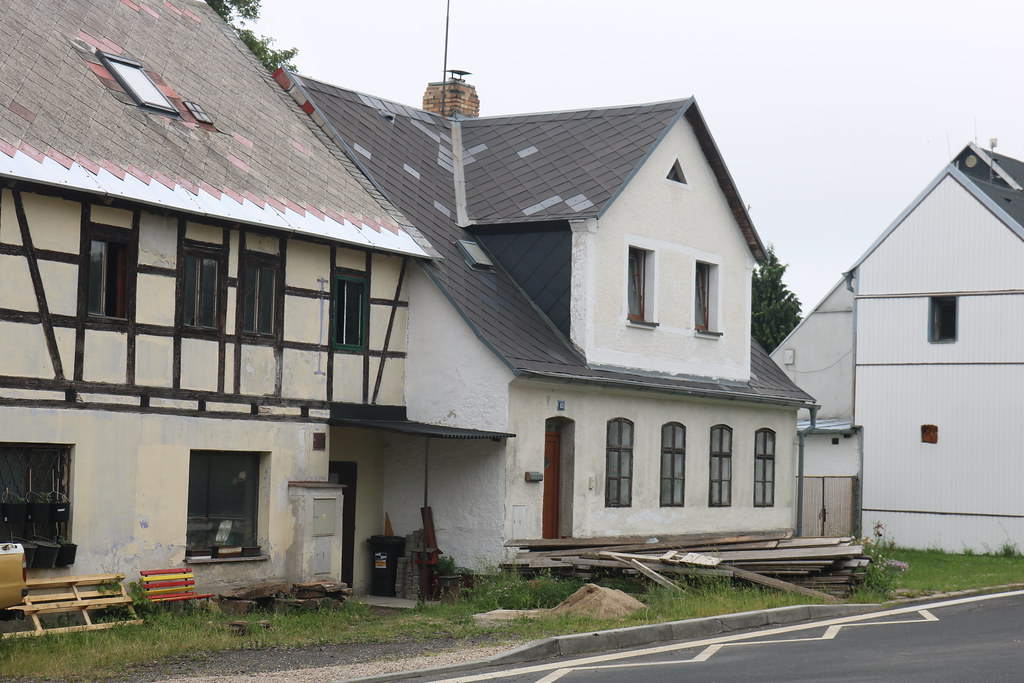
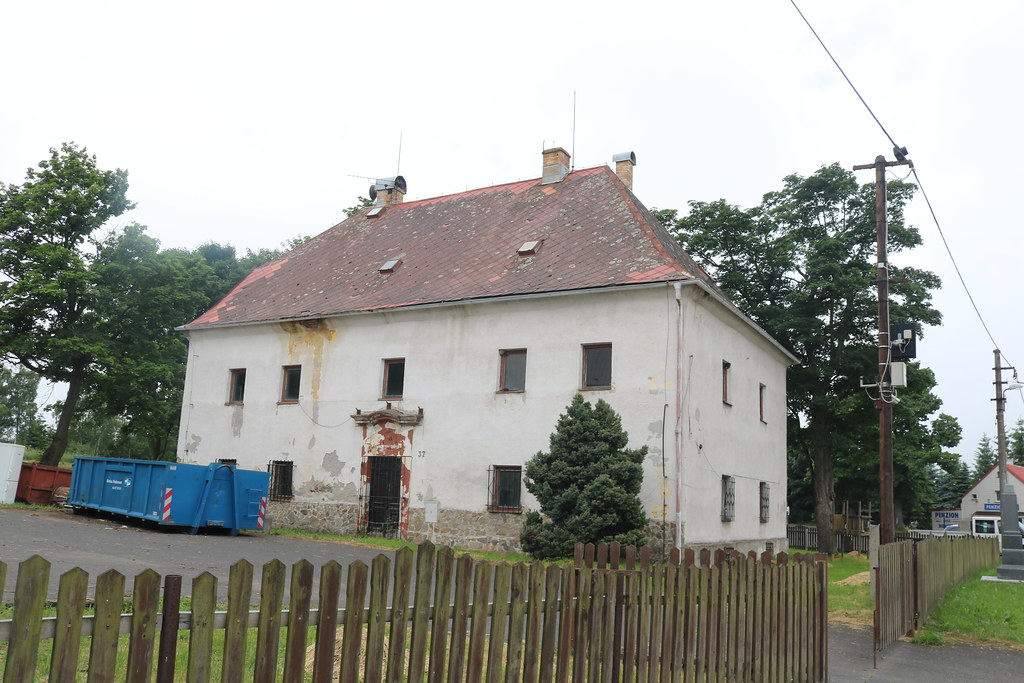
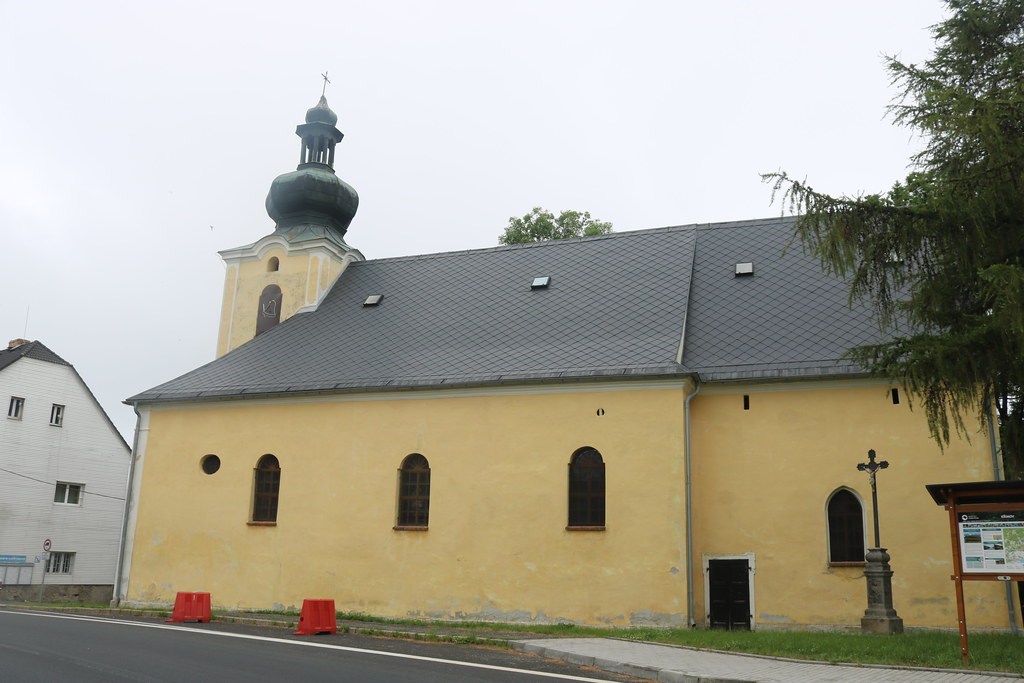
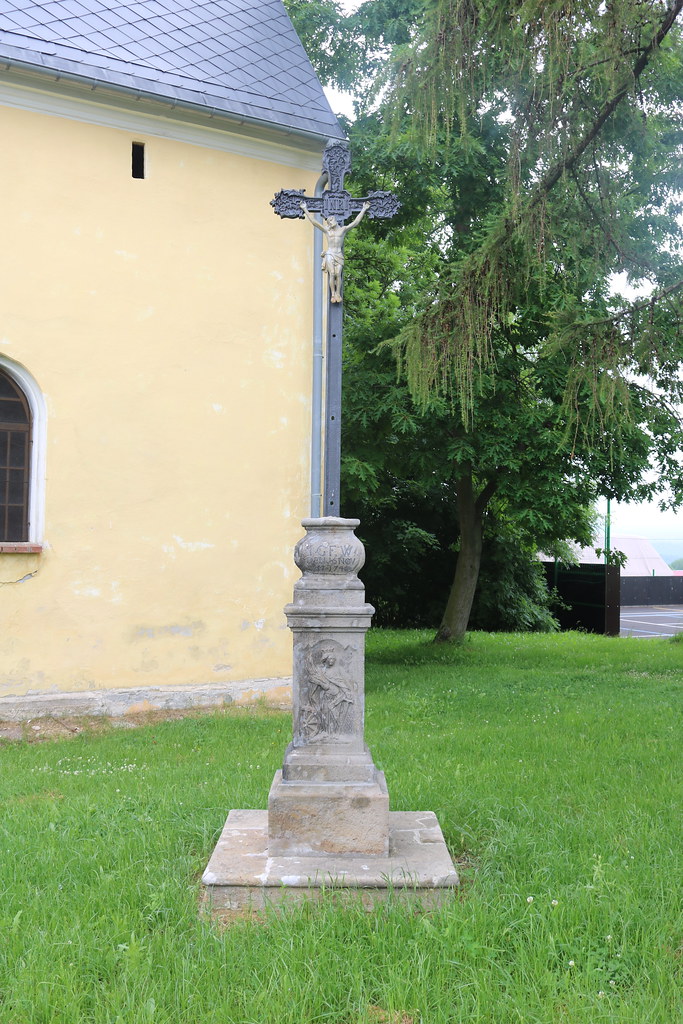
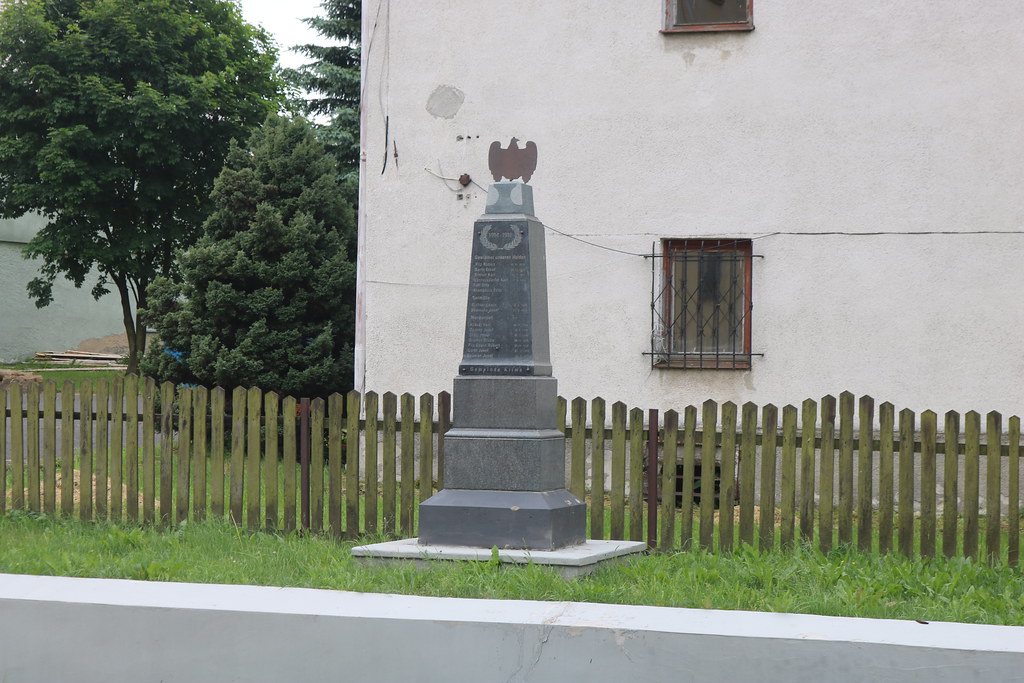
Impressions:Again a large village, located northwest of Chomutov, where there are several interesting sights.