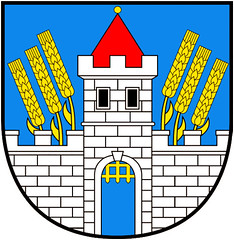
City coat of arms:
Visited:20. 9. 2021
History:Klášterec nad Ohří (German: Klösterle an der Eger) is a town located about 19 km southwest of Chomutov. The town got its name after a small monastery (monastery) or priory, which was founded by the Benedictine monastery of Postoloprt. In historical sources the name appears in the following forms: Claustrellum (1352), Closterlin (1356), Claustralium (1399), Closterlij (1356), in Claustrello (1363), de Klasterzecz (1407), Classterzecz (1431), Klassterecz (1541), Klassterzecz (1545) on Klášterec (1615) or Klösterle (1787). The adjective above the Ohře River started to be used in 1921/23 to distinguish it from the identically named villages near Vimperk and near Žamberk. We do not know exactly when this town was founded. It was probably founded sometime between 1150 and 1250, but it is not certain whether there was a village before the provost's office or whether it was founded around the provost's office. In 1277 King Přemysl Otakar II. The local provostry was abolished and its property was given to the royal crown, from where it was given as a fief to the Šumburk family. This family annexed the local settlement to the Perštejn manor. In 1352 we learn the Latin name of this village Claustrellum and in 1356 the German name Klosterlin. At the beginning of the 15th century, Klášterec gradually began to grow in importance and the Hussite wars, which miraculously avoided it altogether, did not take away its significance. Already in the middle of the 15th century Klášterec was marked as a town that had the right to hold weekly markets. In the second half of the 15th century, the local townspeople, with the knowledge of their lord, illegally used certain rights, such as the right to brew beer, the right to make handicrafts and to hold markets, and thus disturbed the market mile from the Royal Town of Kadan. This dispute led to the provincial court, when Klášterec sued the Purgrave of Kadan in 1493. It was not until 1502 that the town received the first of these privileges from the owner of the estate, Felix of Fictum. At the beginning of the 16th century the town fortifications were completed. Already in 1512, Christopher of Fictum made sure that Klášterec became a free manor. The coat of arms of Klášterec is recorded for the first time in 1520, but we do not know who granted it and when. In 1523 a craftsmen's guild was founded in the town. In 1529, the town was granted rights by the owner of the estate, Volf Dětřich, to extend the inheritance rights of the inhabitants and also to have a lower jurisdiction. Unfortunately, the growth of the town was slowed down by the Schmalkad War, which took place between 1546 and 1547 between the Catholic Emperor Charles V and his brother, the Czech King Ferdinand I. During this war, the area around the monastery was first sacked by the Stavov army and then the town was attacked by the army of General Thumshirn. In 1547, the town began to collect customs duties on the navigation of the Ohře River. But another tragedy came in the form of the Thirty Years' War. The owner of the estate, Christopher of Fictum, sided with the rebellion of the Estates and after the Battle of White Mountain, Klášterec and all its estates were confiscated from him and in 1623 Christopher Simon of Thun purchased the estate. In 1621, groups of marauding soldiers moved around the town. After the Battle of Breitenfeld in 1631, the townspeople of Klášterec had to flee the town to the Doupovské hory. In 1636 the town was taken over by the imperial army, to whom the town had to pay tribute. In 1639 the Swedes took the town and the imperial army tried to burn it down. This act resulted in the burning of the entire town. In 1645 Klášterec was sacked by the Swedish army of Tortenson and already in 1646 the town was sacked by the Swedish army under Wrangel. It took many years for the town to recover from this war.
In 1659, the rights of artisans were confirmed and extended, giving artisans the right to become free burgesses. On 27 March 1666, the town was granted its first imperial privilege, the right to hold an annual market three times a year. Gradually, as the town was rebuilt, the weaving trade also began to develop in the town. By the turn of the 17th and 18th centuries there were already 57 master weavers. In 1700, a shooting club was founded here, which organised shooting competitions. In 1706 we learn of the restoration of the local execution ground, but in 1725 the last execution took place here. Already in the 1820s there were 11 guilds here. Unfortunately, in 1726 a great fire destroyed the original medieval church, which was never rebuilt. Since 1731 Klášterec had its first doctor. In 1742 Klášterec was then occupied by the French army, which went into battle with the imperial troops. And already in 1762 the town had to pay a ransom to the Prussian troops in order not to be destroyed. And as early as 1784, another fire struck the town, damaging part of the town near the castle and the church, and in 1785 the town and suburbs were equalized. And as early as 1786 the Nankin textile manufactory, a steel goods factory, a hosiery factory and a carbon black factory are mentioned. Sometime during the 1880s, the Monastery waterworks were built. In the 1840s, the gradual building of roads began, which improved connections with the surrounding towns and villages. After the abolition of the patrimonial administration in the middle of the 19th century, the town became a town in its own right and the first elected mayor was Josef Melzer. During the second half of the 19th century, various associations were slowly established in this town. In 1852, the first post office was opened here and in 1856, the castle and the brewery were again destroyed by fire. Another fire followed in 1859, but it engulfed the whole town. In 1870, the construction of the local railway line began, during which a bridge over the Ohře River was built. This bridge witnessed an incident when the journalist Mikoláš Urban feared floods caused by the bridge becoming blocked. Citizens of other villages around the Ohře River joined this opinion and set out to demolish the bridge in 1871. Even the army had to intervene against the citizens equipped with hoes and pickaxes. At the end of the 19th century, a municipal police force was established in Klášterec. During the Second World War, the town suffered several bombing raids by the Allies. Immediately after the outbreak of the Prague Uprising at the end of World War II, two Czech inhabitants of Klášterec took the initiative and hoisted the Czech and Soviet flags on the town hall building. And already on May 6, 1945, there was a firefight between the liberated Russian prisoners and the Germans. After the end of World War II, the original population was displaced and the inhabitants from the interior were resettled. Thus, while in 1930 there were 2,524 inhabitants, in 1950 there were 1,593 inhabitants. According to the 2011 census there were 5 922 inhabitants.Source:https://cs.wikipedia.org/wiki/Kl%C3%A1%C5%A1terec_nad_Oh%C5%99%C3%AD
Source:https://www.klasterec.cz/zakladni-informace/historie-mesta/vyvoj/20-stoleti/
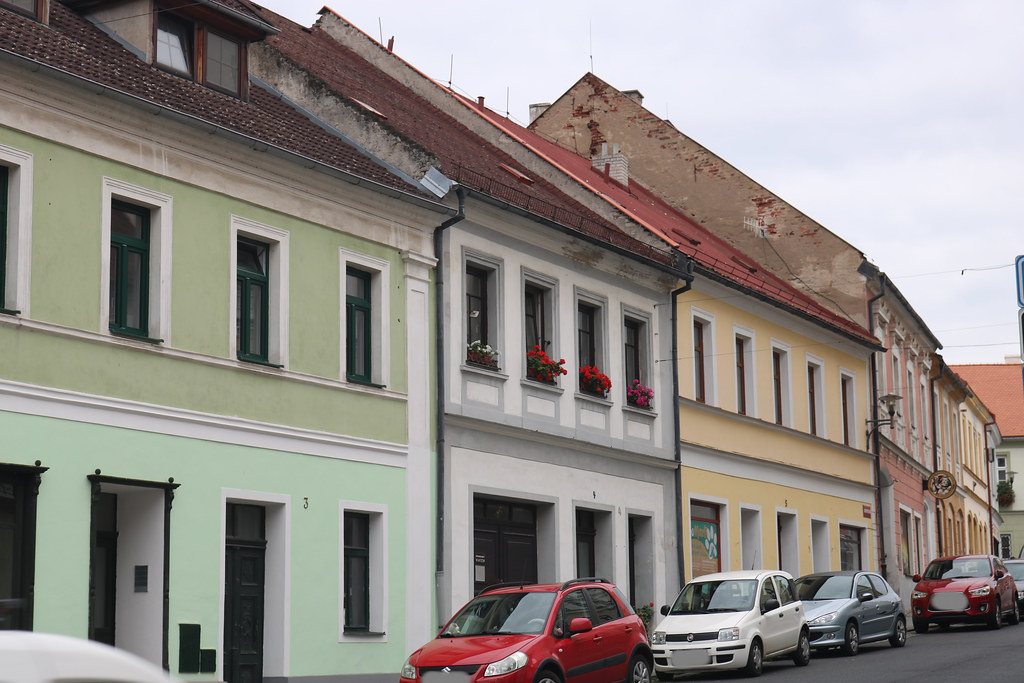
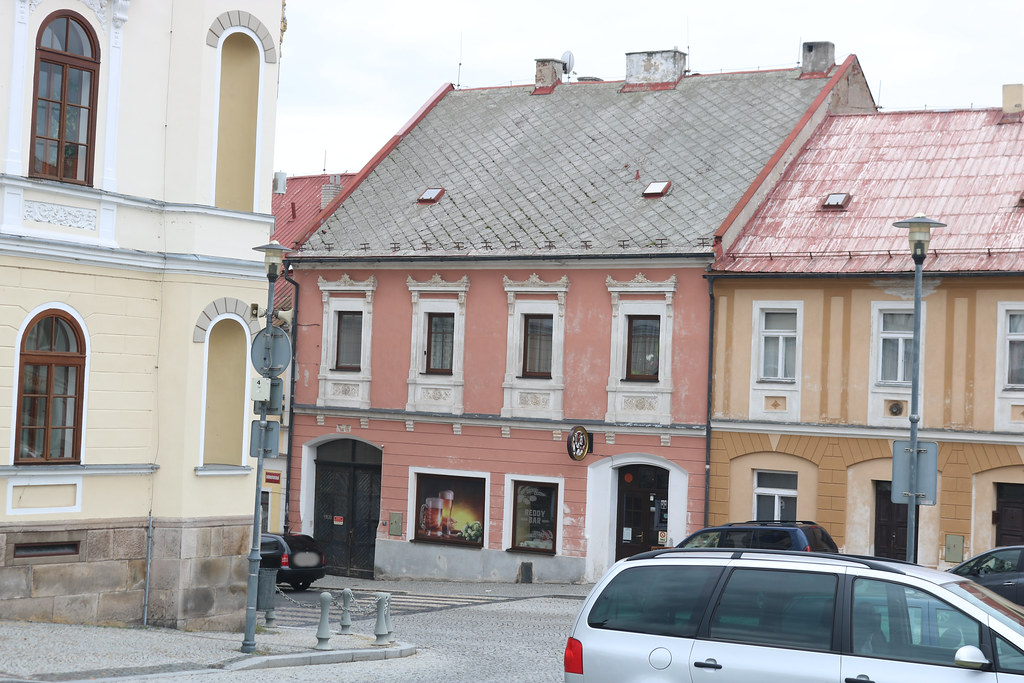
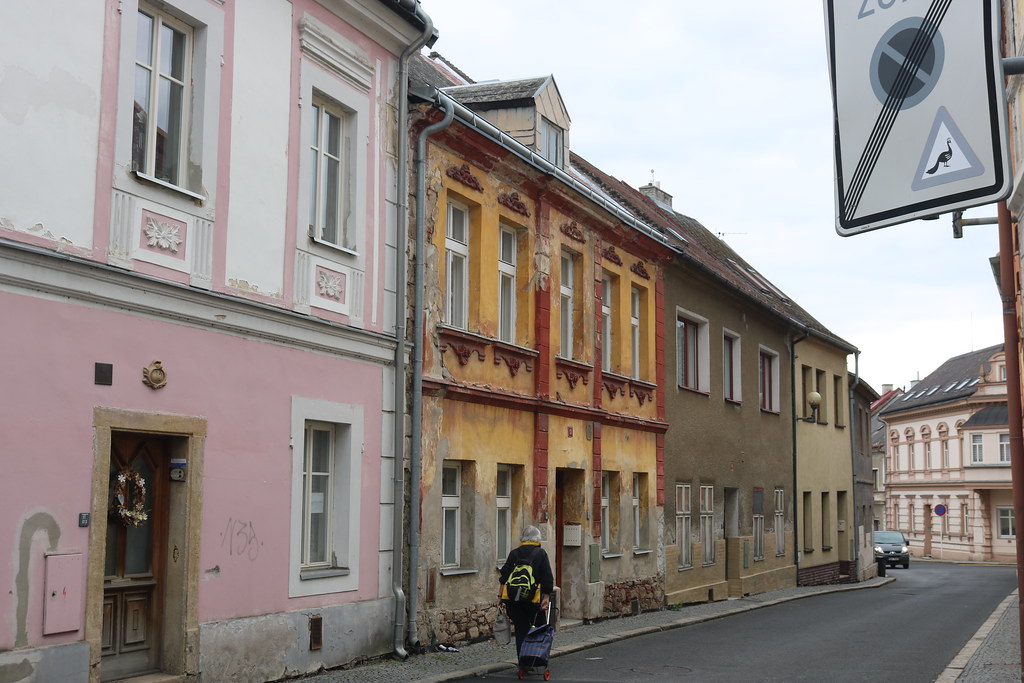
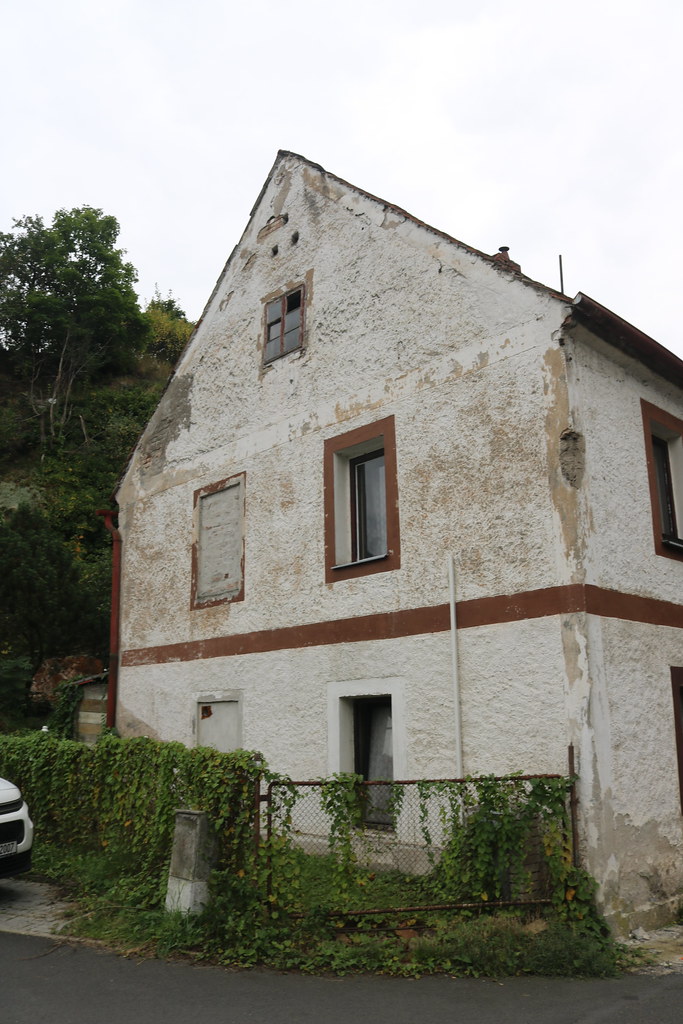
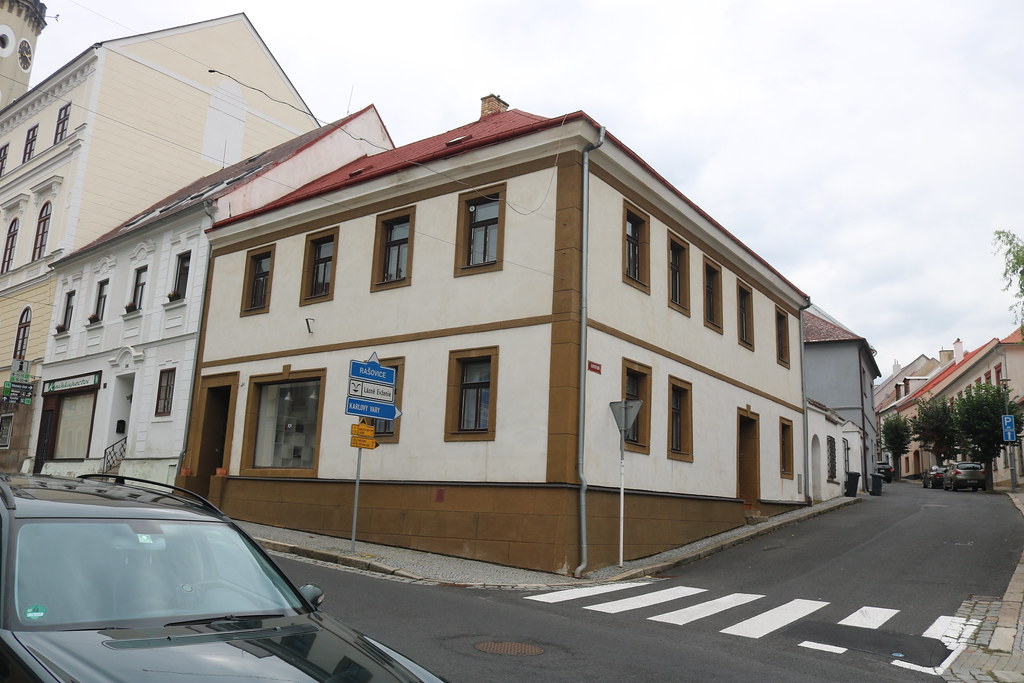
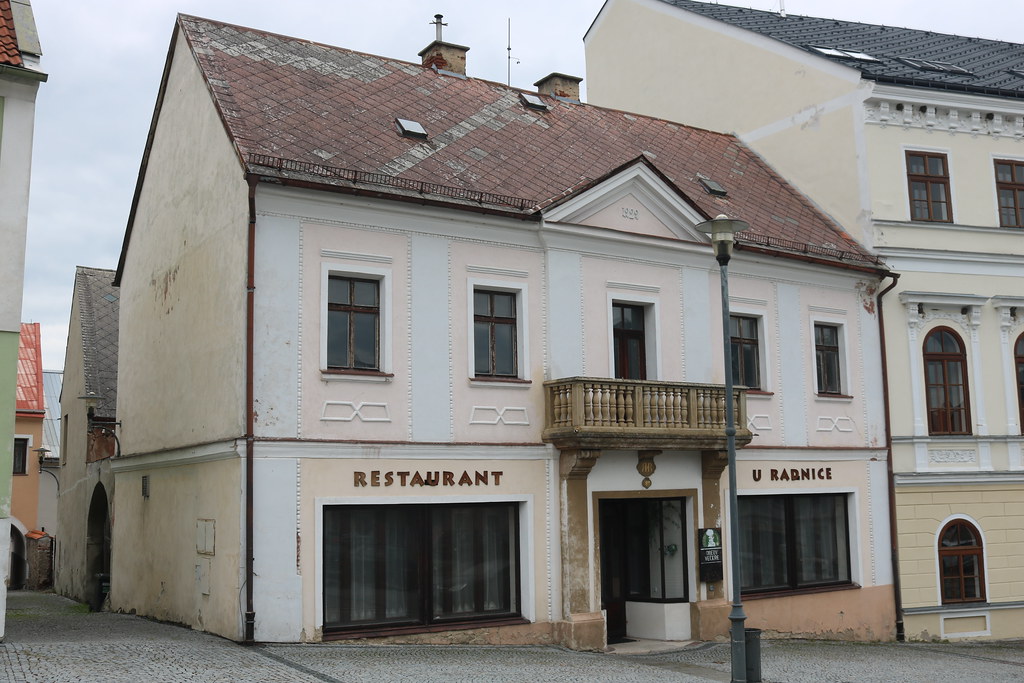
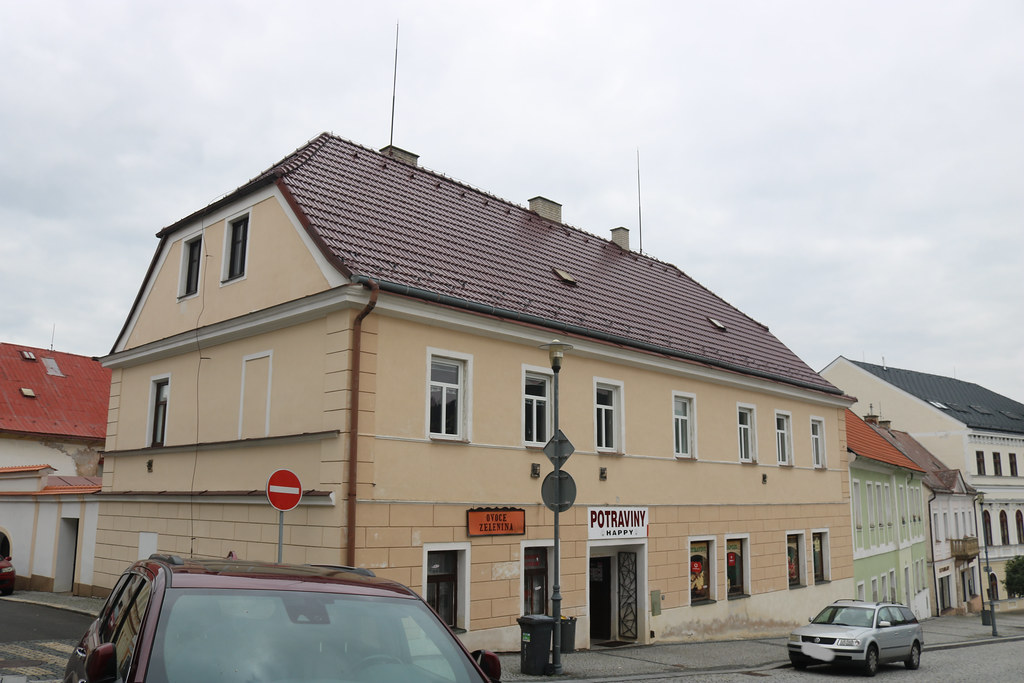
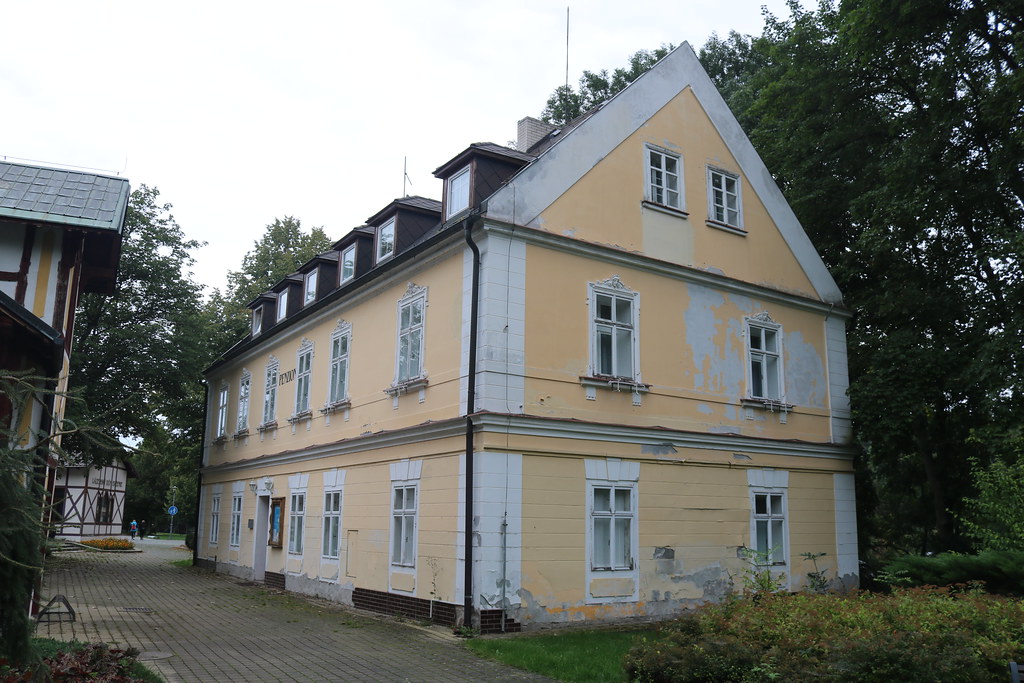
Impressions:Historical town located southwest of Chomutov.