City coat of arms:

Visited:20. 6. 2021
History:The village of Černovice (German: Tschernowitz) is located about 4 km southwest of the town of Chomutov. The name of the village is derived from the personal name Černa meaning village of the people of Čern. In historical documents, the name appears in the forms Schirnowitz (1281), Zschirniwitz (1497), Cziernowicz (1587), Cziernowicze (1606), Czirnowiczy (1623), Cžernowicze (1787) or Tschernowitz (1846). Another interpretation derives the historical entry Schirnowitz from the name Žernovice in the sense of a village of stonemasons who produced millstones. The first written mention of the village dates back to 1281, when it probably belonged to the German Knights of Chomutov. It was also part of the Chomutov manor in 1488, when Benes of Veitmile († 1496) settled the financial claims of the Order and thus acquired the manor for his own possession. Copies of documents from the time of the Lords of Veitmile have been preserved with records of the rights and obligations of the inhabitants of Czernowitz. Later, the Štampach family of Štampach acquired Černovice and added it to their Ahnníkov estate, which they lost during the post-Whitehorse confiscations. The confiscated estate was bought from the royal chamber in 1623 by Jaroslav Bořita of Martinice. When the manor was inherited by Countess Marie Anne of Althan in 1791, an inventory was compiled which lists four peasants with a cover, ten peasants with half a cover, twenty-five peasants without a cover and nineteen householders in Černovice. It also included a list of labour duties (the locals had to work 2 184 days a year with a cover, 2 200 days of manual labour in summer and 1 091 days in winter) and financial compensation of over 681 guilders, which the Černovice peasants had to pay to the authorities in order not to have to work. In the same year the first school was opened. The next owners of the estate were the Lords of Firmian from 1810 and Count Charles of Wolkenstein in 1848. On the slopes of Hradiště Hill there were sandstone and quartzite quarries, the stone of which was used in the construction of the churches in Chomutov and other buildings in the wider area. Stone processing reached its peak between 1680 and 1720, but it ceased to exist at the end of the 19th century. In addition, from the 16th century until 1895 a hammer mill operated in the village. After the abolition of the patrimonial administration in the mid-19th century, the village became an independent municipality. In the 1870s, a small brown coal mine of Karl von Mayer was established near Černovice. It was closed in the following decade. In the first half of the 20th century, kaolinized clay was also mined, which was used to produce refractory fireclay in the brickworks until its fire in 1951. At the end of the 19th century, the area of Czernowitz measured just under 607 ha (337 ha of arable land, 30 ha of gardens, 19 ha of meadows, 38 ha of pastures and 23 ha of unusable land). Most of the 553 inhabitants worked in agriculture, but there were also three merchants, four inns, one tavern, two shoemakers, one baker, a blacksmith, a butcher, a tailor and a carpenter. Some of the residents worked on the railroad. After the end of World War II, the original German population was removed and the inhabitants from the interior were resettled. In 1930 there were 892 inhabitants, in 1950 there were already 644 inhabitants. In 1950, a single agricultural cooperative was established in Černovice, which later merged with the cooperative in Spořice and together became part of the JZD Vpřed in Údlice. In the early 1960s, the old wooden water supply system from the 19th century was reconstructed and in 1967 the Agricultural Purchasing and Supply Plant was founded. In 1961, the village lost its independence and became part of the municipality of Spořice, but in 1969 the village became an independent municipality again, which it has been until now. The local cinema was converted into a cinema café in the 1970s, but the operation of the original five-class school was gradually reduced until it was completely closed in 1976. The progress of lignite mining at Nástup quarry, which forced the relocation of the railway line from Chomutov to Karlovy Vary and also the I/13 road, affected the urban planning of the village. On April 25, 2018, a resolution of the Committee for Science, Education, Culture, Youth and Sports approved the awarding of the municipality's emblem and flag. According to the 2021 census, the total population of the village was 647.
Source:https://cs.wikipedia.org/wiki/%C4%8Cernovice_(district_Chomutov)
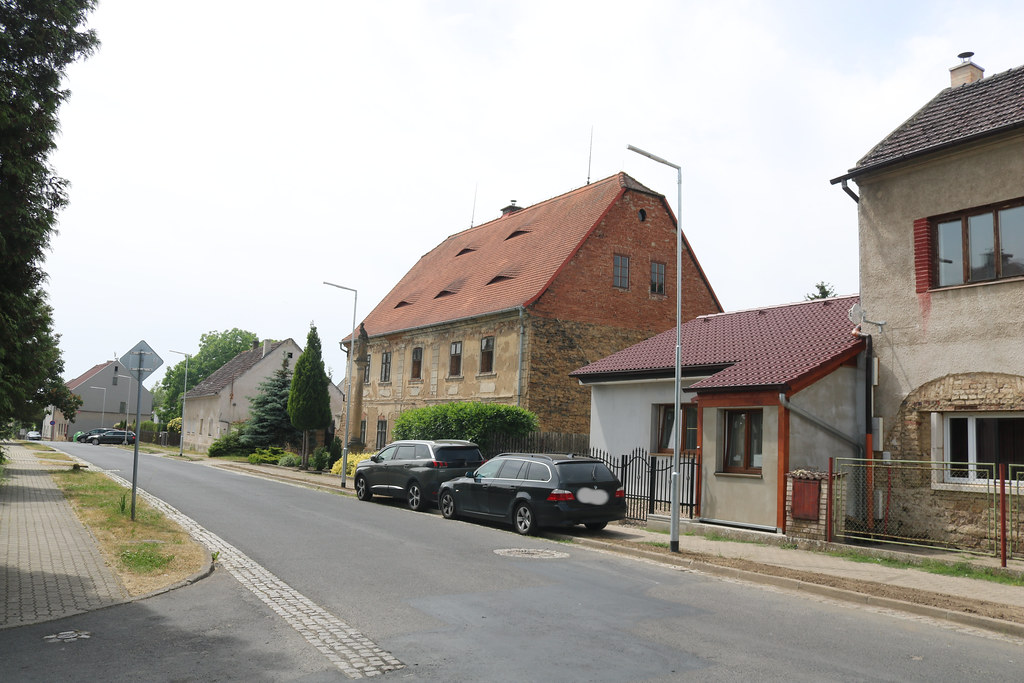
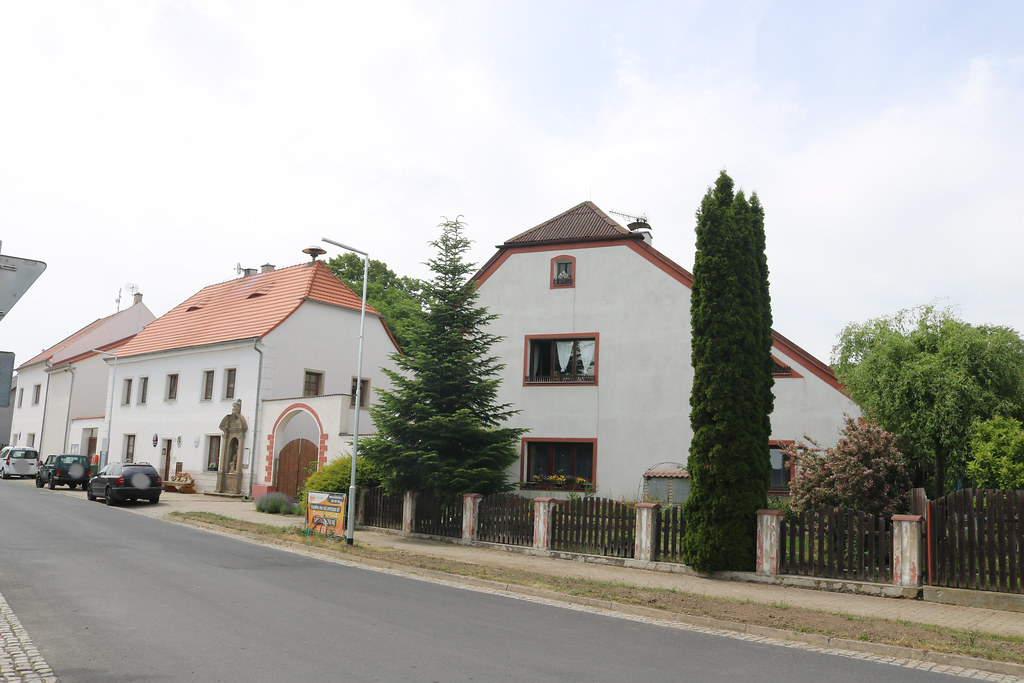
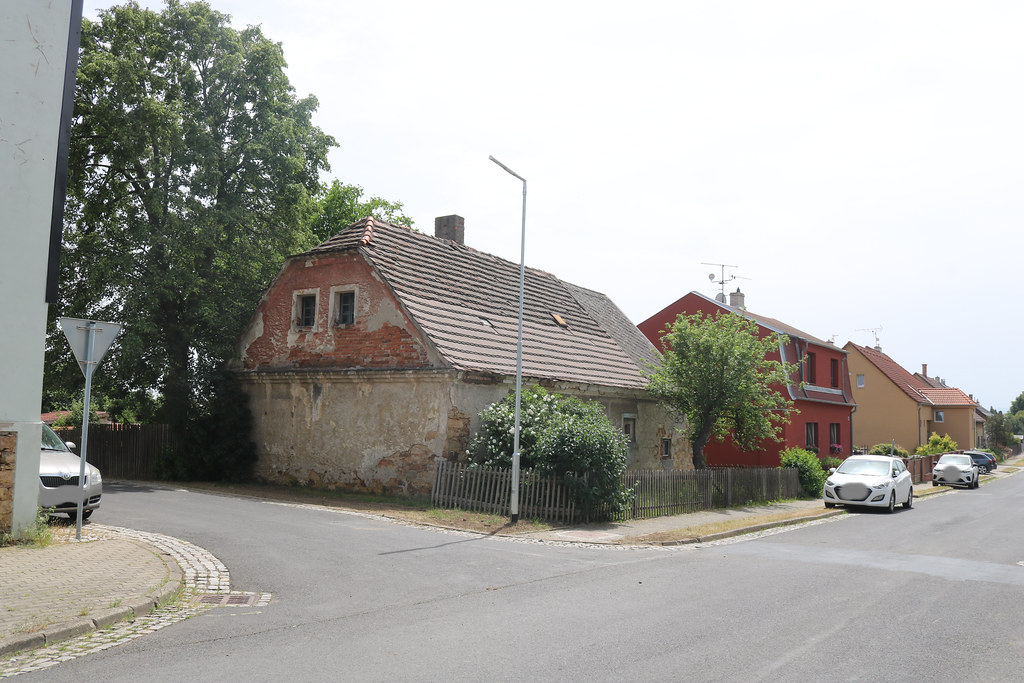
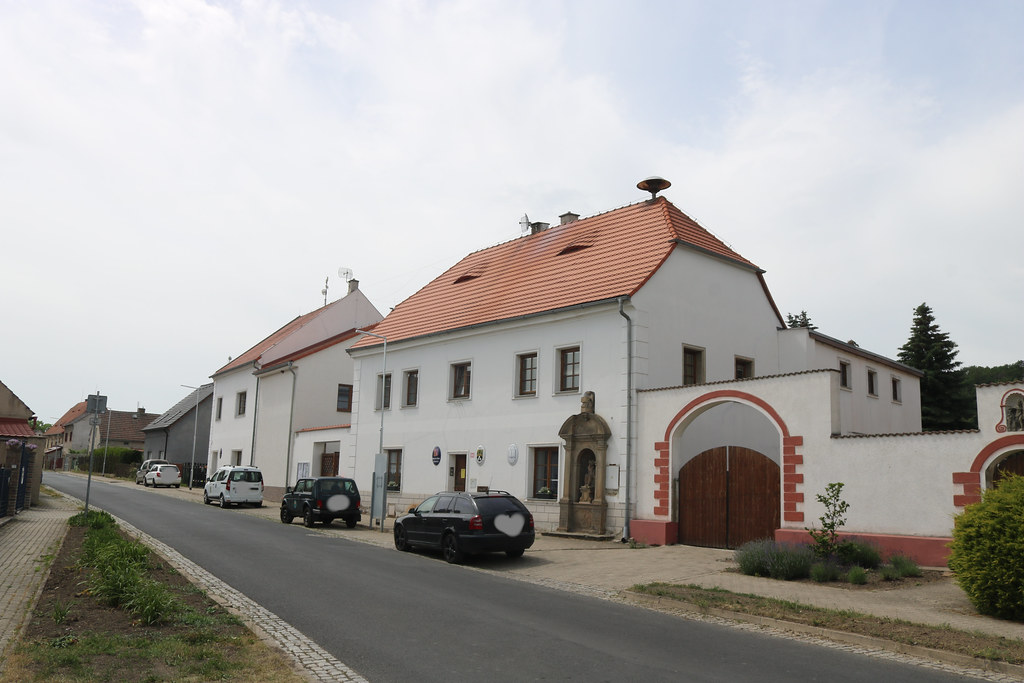
Impressions:A large village, located southwest of Chomutov, where there are several attractions.