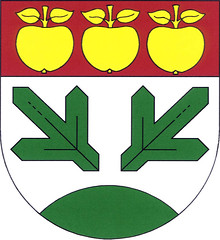
City coat of arms:
Visited:12. 9. 2021
History:Boleboř (German: Göttersdorf) is a village located about 5 kilometres northwest of Jirkov. The name of the village is derived from the personal name Bolebor meaning Bolebor's forest or grove, from which it was transferred to a nearby village. In historical documents, the name appears in forms such as Gotfridi villa (1352), Boliborz (1392), Boleborss (1405), Gottessdorff (1549), w Boliborzy (1561) or Getterrsdorff (1623). This village was probably founded during the first half of the 14th century. The first written mention of the village dates back to 1352. Boleboř belonged to the estate of Nový Žeberk Castle, where Ota of Berg resided at the turn of the 14th century. The nobility had the patronage right to the Boleboř church, which became a parish church in 1384. In 1383 Nový Žeberk was bought by Těma of Koldice. The Koldice, who mortgaged the castle several times, owned the manor until at least 1402, after which it changed hands with several owners, including Albrecht of Dubá, Albrecht of Ervěnice (1407) and perhaps also Dětřich Kraa of Borek. From 1418 the estate belonged to Vít of Šumburk, after him perhaps to his son, and in 1453 Albert Konipas became the owner. Borek became his seat, and from then on Bolebor belonged to the Red Hrádek manor. In 1516 Lorenc Glac bequeathed all the property to his daughter Anna, from whom it was acquired by marriage by Šebestián of Veitmile. Boleboř became part of the Chomutov manor, where it remained until 1605, when the property confiscated from Jiří Popel of Lobkovice was sold off. Boleboř belonged to the villages bought by Linhart Štampach of Štampach from the Ahníkov estate. Under Linhart's son Jan Jindřich, Boleboř was annexed to Březno. In 1622, Jan Henry had all his property confiscated for his support and personal meeting with King Frederick the Great during the Estates Revolt. Although he was to be paid half the amount for which his property was sold, Jan Henry Štampach left for Saxony in 1628. Jaroslav Bořita of Martinice, whose son-in-law Florián Jetřich Žďárský of Žďár, annexed it to the united Ahníkov-Prunéřov estate in 1623. The first mention of the Boleboř fortress dates back to the same time, and at the end of the twentieth century, parts of the moat and ramparts remained to the north-east of the demolished church. However, these parts have been badly damaged by contemporary development and are almost unrecognisable. After the Thirty Years' War the village was in a poor state. Ten farmsteads were abandoned. There were six peasants, fifteen cottagers and nineteen serfs with no major property. One of them was a wheelwright, another a tailor, one of the peasants had a shoemaker's shop and three cottagers worked as a shoemaker, tailor and weaver. All the inhabitants owned a total of thirty covers, 51 cows, 29 heifers, two pigs and 23 goats. In 1670, Boleboř was finally annexed to the Ahník manor under Maximilian Valentin of Martinice and the fortress fell into disrepair and was dismantled. Sometime at the turn of the 17th and 18th centuries, the Martinic family had a small chateau built as a summer residence at the farmstead, which was converted into a forest administration seat after 1880. In 1794 the village had 71 farms, a church with a rectory and a school, a manor house and an ash yard. Apart from farming, the inhabitants were engaged in flax spinning, linen bleaching and fish farming in four ponds. The Lužec brook (also Nivský brook) was used to float timber to Jirkov. In the nineteenth century most of the inhabitants earned their living by making wooden household goods. At the end of the nineteenth century, wooden plugs and veneer boxes were also produced. After the abolition of the patrimonial administration in the middle of the 19th century, the village became an independent municipality, which has maintained its independence to the present day. According to reports from 1898, there were four inns, two shops, a newsagent and a baker, a blacksmith, a butcher, a barber, three wood turners, two shoemakers and three tailors. Farmers grew rye, barley, oats, flax, potatoes and clover. Nearby there was a steam sawmill where wood from the surrounding forests was processed and gravel was extracted in a quarry. Around 170 pupils attended the three-class school. In 1900, a water supply system was built in the village, to which seven fire hydrants were connected. Five years later, the mayor Antonín Zimmermann proposed the establishment of a fire brigade. In 1906, the fire brigade had 40 members and purchased a sprinkler. The biggest fire was extinguished by the local firefighters in Bolebor, when on October 27, 1947, after a long period of drought, a fire broke out in which fourteen houses and a church burned down. After the end of the Second World War, the original population was displaced and settled from the interior. This resulted in a total of 414 inhabitants in 1930 and only 144 in 1950. During the 1960s, some of the houses were converted into recreational housing and one inn was turned into a recreation centre, which belonged to the Czechoslovak Army's Velkodol. Buildings of the Chomutov State Farm were also constructed for breeding slaughter cattle. Around thirty employees worked there and lived in two new apartment buildings. Most of the inhabitants, however, commuted to industrial enterprises in the foothills. According to the 2011 census, a total of 172 inhabitants lived here.
Source:https://cs.wikipedia.org/wiki/Bolebo%C5%99
Source:Castles, Chateaus and Fortresses in Bohemia, Moravia and Silesia - Dr. Rudolf Anděl
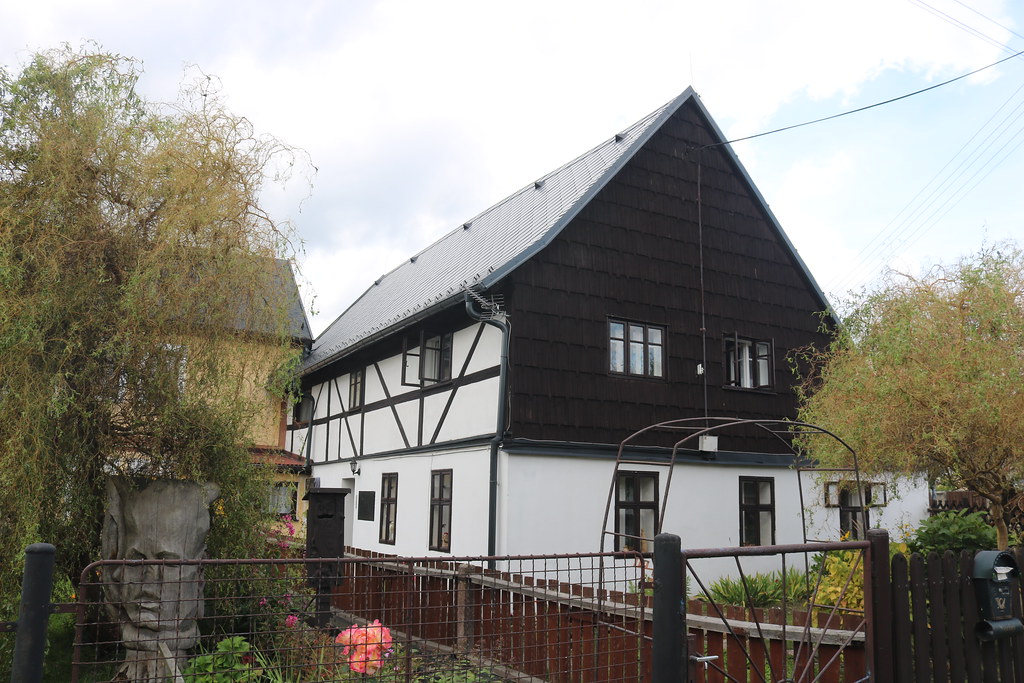
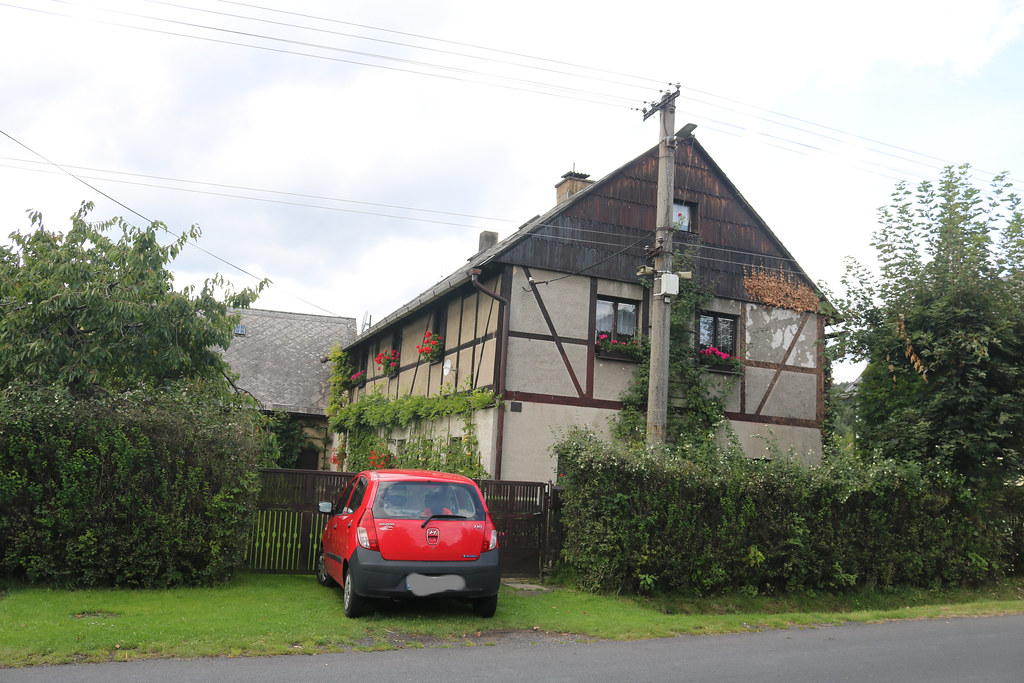
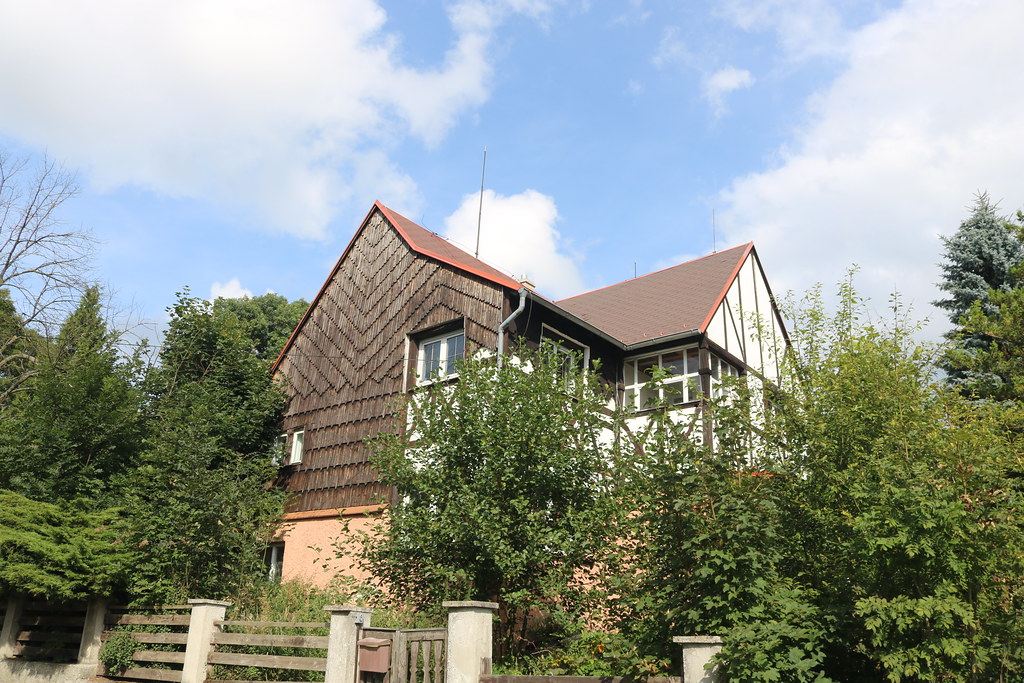
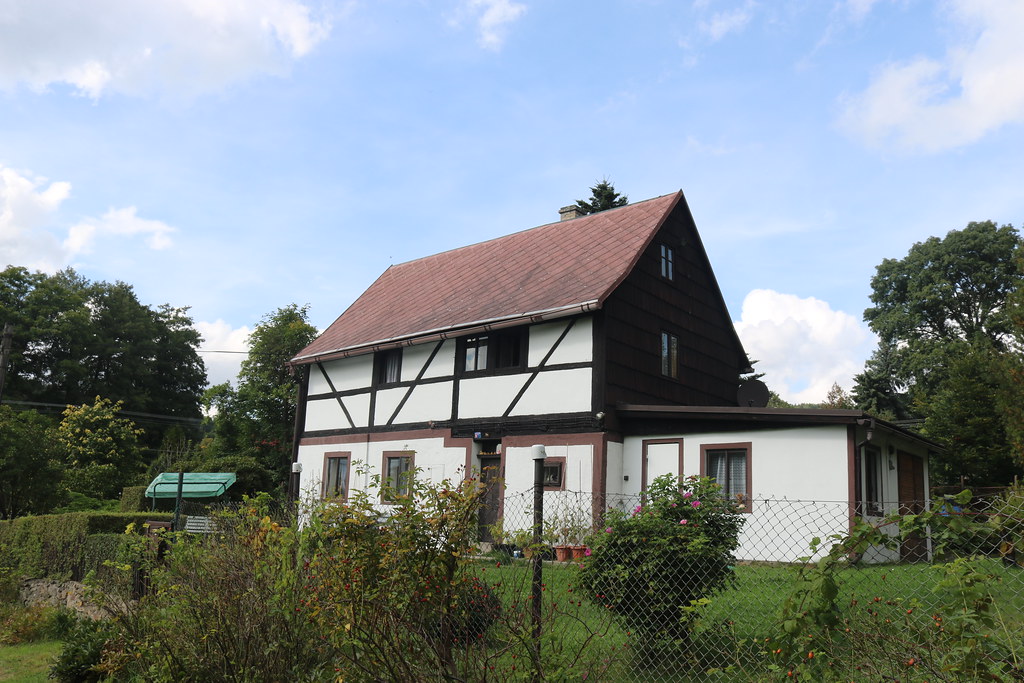
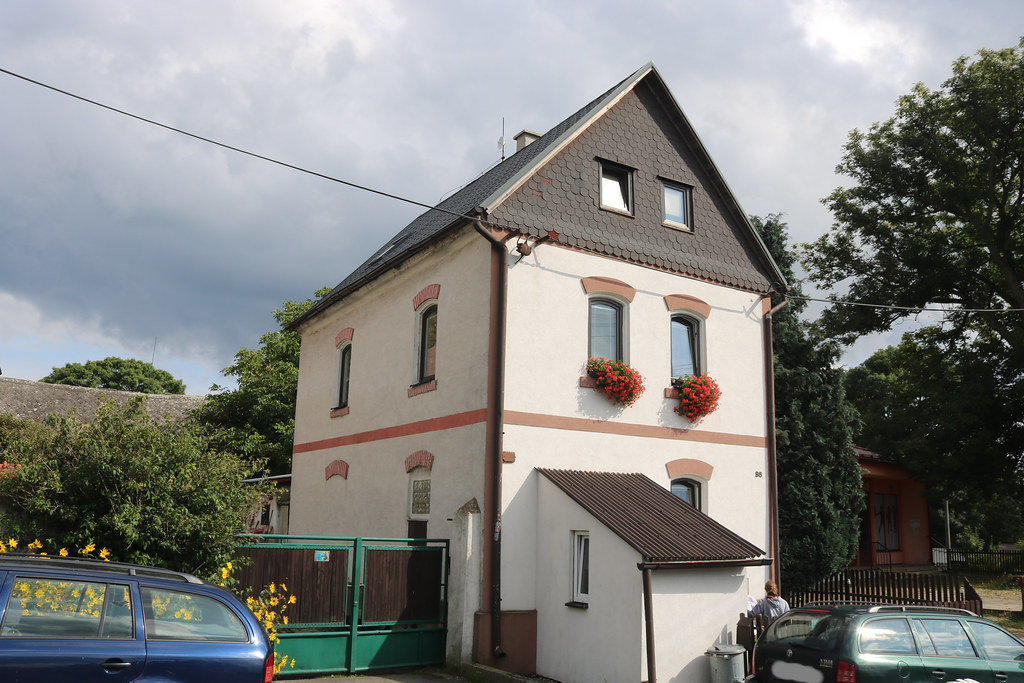
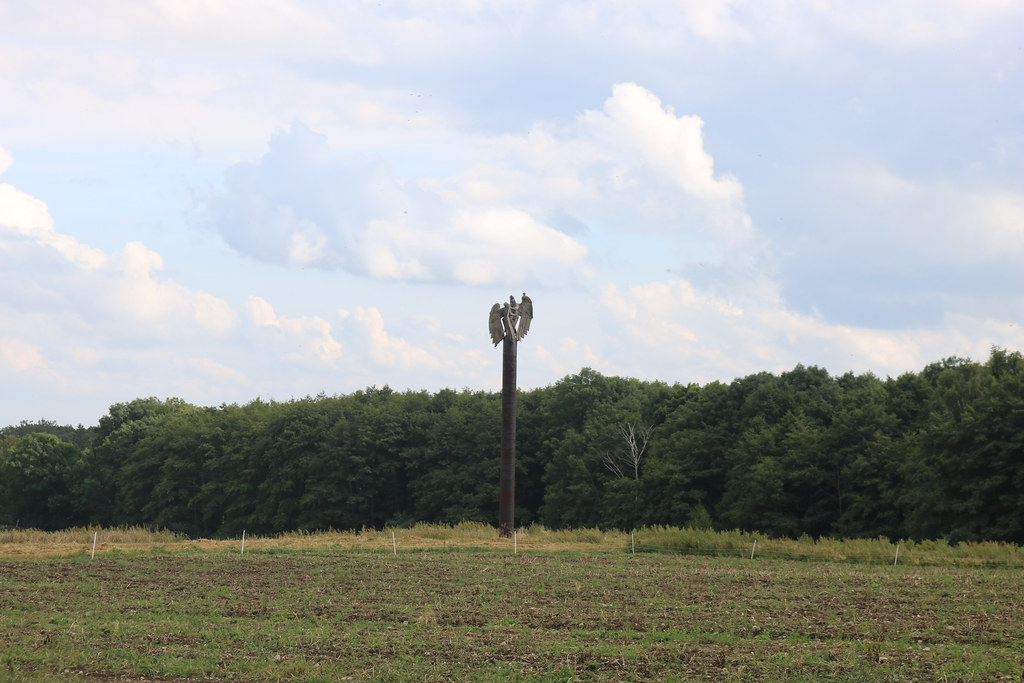
Impressions:Smaller village, located northwest of Jirkov, where there are many interesting things to see.