City coat of arms:

Visited:11. 9. 2021
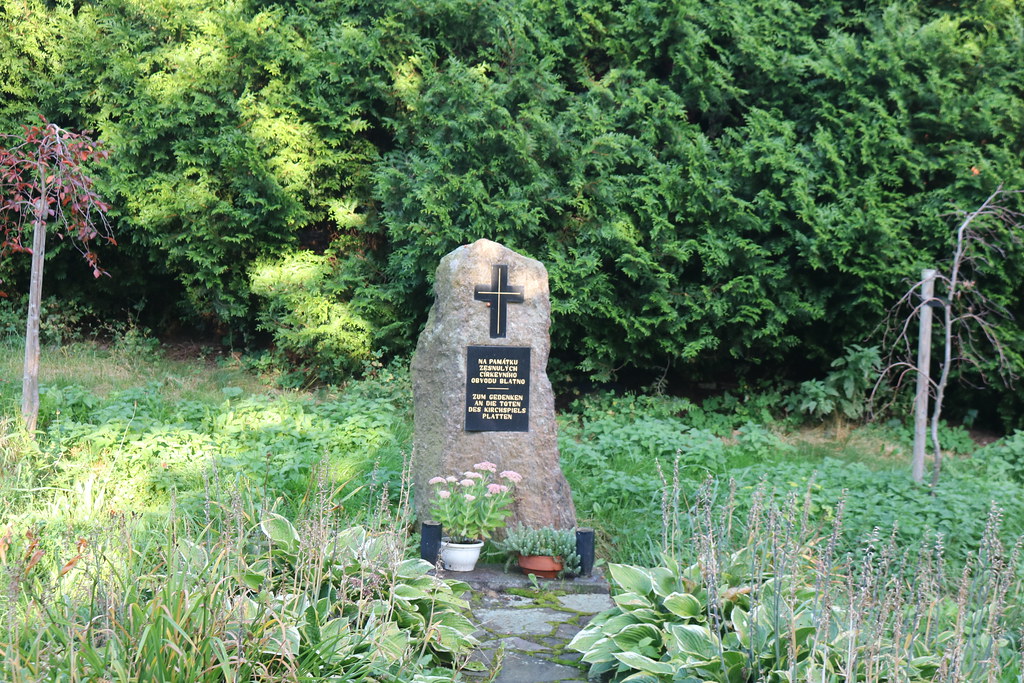
History:Blatno (German: Platten) is a village located about 6 km northwest of Chomutov. The name of the village is derived from the Old Czech adjective blatný meaning muddy, in which the first letter changed to P (Platten) after translation into German. In historical documents, the name appears for example in the forms Blatno (1424), na ves Blatnu (1561), Blattno (1564), ves Platna (1606) or Platten (1846). At the end of the thirteenth century Blatno belonged to the estate of the German Knights of the Chomutov Commandery. The first written mention of the village dates back to 1352, but older literature gives the incorrect date of 1344. The Blatná commandery is mentioned in written sources for the first time in 1402. A trade route from Chomutov to Saxony passed through the village. In 1384 there was a parish church with a cemetery. At the beginning of the 15th century, the local commander Albrech of Dubá made robbery expeditions to the surrounding area until he was removed from office in 1404. At that time, German knights had disputes with King Wenceslas IV, who seized Blatno as payment for their debts. In 1410 he confiscated all the property of the Order in Bohemia. At the beginning of the Hussite wars, the Blatno garrison was commanded by the highest provincial scribe and Catholic Mikuláš Chudý of Lobkovice, who had Chomutov and Blatno as a pledge from Emperor Sigismund since January 1424. Later, the Hussite governor Jakoubek of Vřesovice conquered Blatno Castle and in 1437 he took it as a pledge together with the Chomutov estate. Blatno then shared its owner with Chomutov. One of the important holders was Jan Calta of Kamenná Hora from 1455. It was only after the death of Jan of Veitmile that his sisters sold Blatno to Václav Hasištejnský of Lobkowice. He invited German Protestants to settle the village, which had been decimated by the plague. In 1571, Bohuslav Felix Hasištejnský of Lobkovice bought the estate. After him, the estate was inherited by his younger son Bohuslav Jáchym Hasištejný of Lobkovice, who, among other things, bequeathed the Blatná estate to his distant relative Jiří Popel of Lobkovice. Other sources state that Blatno was bought by Bohuslav Jáchym from his son Václav Hasištejnský of Lobkovice. Jiří Popel started a process of recatholization on the estate, during which he expelled the Protestant priests from the estate. After the confiscation of his property for speaking out against Emperor Rudolf II, Adam Hrzán of Harasov bought Blatno with twenty other villages in 1605 and annexed it to the Red Hrádek manor. During the Thirty Years' War, the surrounding area was often devastated by invasions of Swedish soldiers and many local inhabitants were killed. The destruction was completed by General Carl Gustav Wrangel and his army, who plundered the village and its surroundings so that the people who survived the invasion later starved to death. In 1645, Blatno was burned by the Swedes and the local castle was destroyed. According to the Berni Rula of 1654, 26 deserted cottages remained in the village after the war. In the others lived five peasants, eighteen cottagers and three hopefuls. The peasants owned thirteen cows, fifteen cows, sixteen heifers, a pig and seven goats. The poorer cottagers had a total of sixteen covers, 38 cows, 37 heifers, and seventeen goats. In addition, one of them had a tavern and another earned his living as a coachman. In 1707, the estate was bought by Prince Jáchym Ondřej Lichtenstein, who had the ruins of the castle demolished and a new Baroque castle built on the foundations of the castle. After the death of the prince, the estate was inherited first by his wife and later by his daughter. In 1771, Alexander Rottenhan became the new owner and established a forestry school at the castle under the direction of the forester Ignaz Ehrenwerth. Emperor Joseph II visited the school, but when Ehrenwerth left for Prague, the school was closed after twelve years. In 1782 the construction of the new St. Michael's Church was started, replacing the old chapel. The village's location on an important route through the mountains did not pay off during the Napoleonic Wars. In 1809 it was occupied by a detachment of Westphalian soldiers, a year later the people of Blatno had to surrender all the gold and silver objects from the church to pay for the war expenses, and in 1813 various armies repeatedly passed through, causing much damage and introducing contagious diseases to Blatno. In 1848 a fire broke out in which thirteen houses and the parsonage building, only ten years old, were burnt down. After the abolition of the patrimonial administration in the middle of the 19th century, this then village became an independent municipality. At the end of the nineteenth century, the inhabitants were engaged in agriculture, cattle breeding and the production of spruce sawdust. Cheese was made in the inn building. Flax was no longer grown. The village had a sawmill and mill, a bolt factory, five taverns, three blacksmiths, two tailors, four shoemakers and many other craftsmen. In addition, there was a post office, a savings bank and two communal houses for the poor. The village had a water supply system built in 1905 and in 1929 electricity was brought to the village from the Kadan power station. The village includes the First Dolský Mlýn in the Bezručov valley, where there used to be a sawmill before 1945. At the same time, five tailors, three shoemakers, three blacksmiths, a painter, a plumber, a cooper and two bakers worked in the village. In addition, there were six inns, two butcher shops and a barber. After the Second World War, the German citizens had to leave for Lounsko, where they worked in agriculture until August 1946, and only then were they moved to Germany. This displacement caused a great depopulation of the village and the settlement of the village by inhabitants from the interior. While in 1930 there were 800 inhabitants, in 1950 there were 593 inhabitants. According to the 2011 census, there were 486 inhabitants.
Source:https://cs.wikipedia.org/wiki/Blatno_(district_Chomutov)
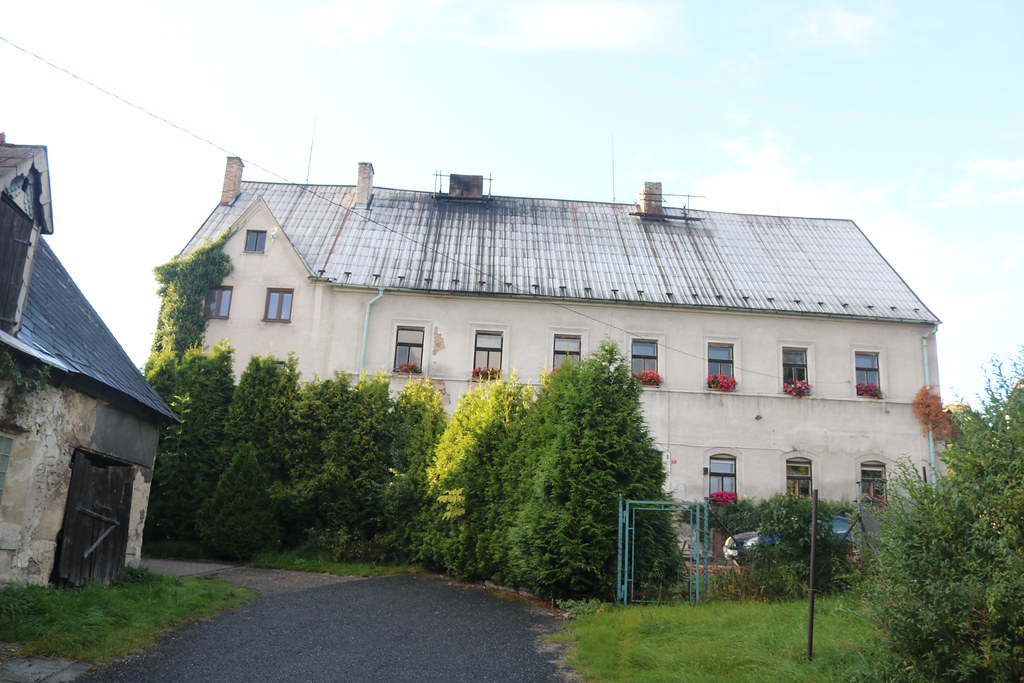
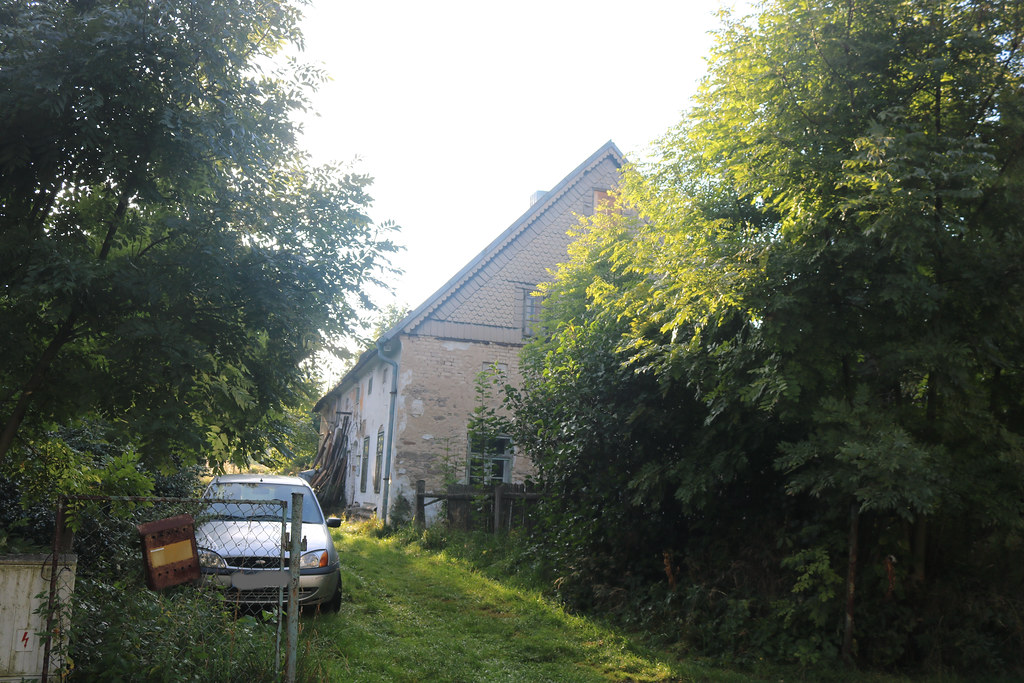
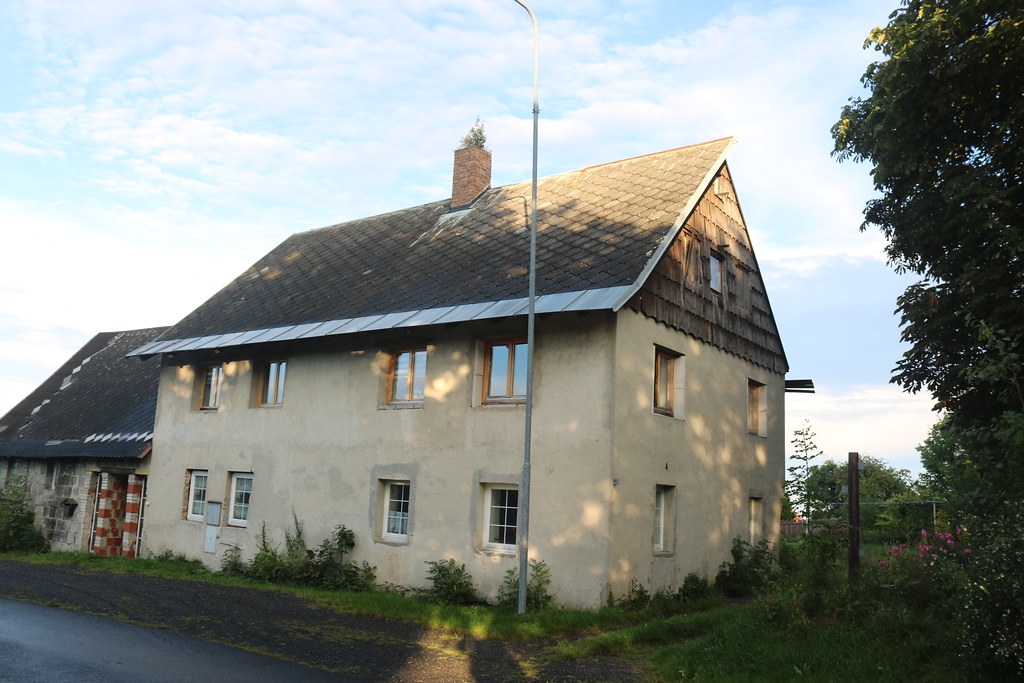
Impressions:A picturesque village located northwest of Chomutov, where there are many interesting sights.