Visited:13. 9. 2021
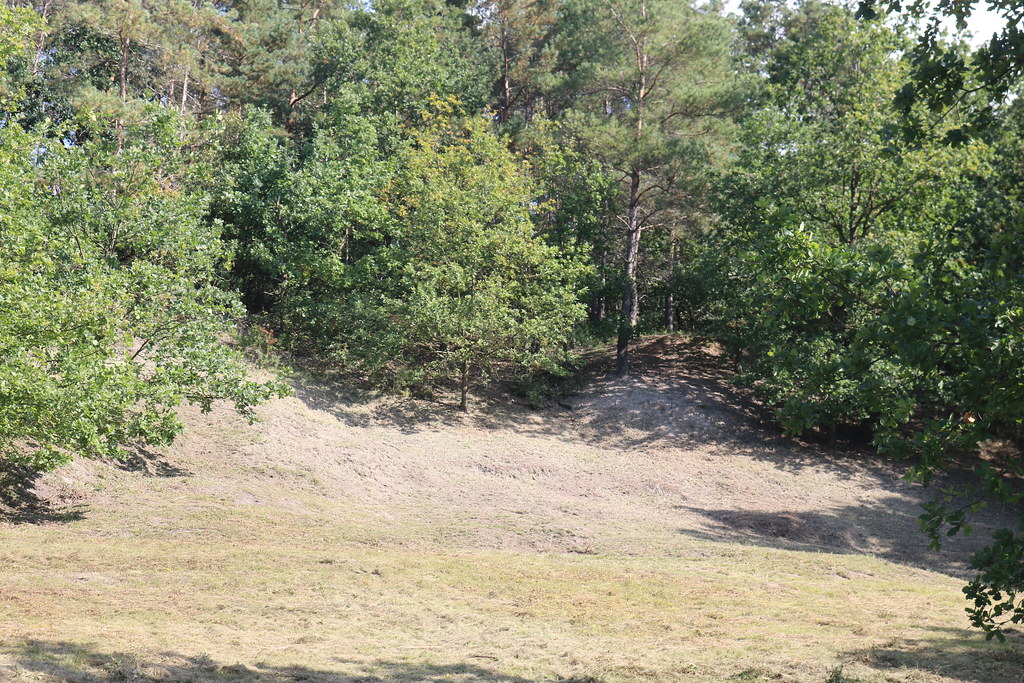
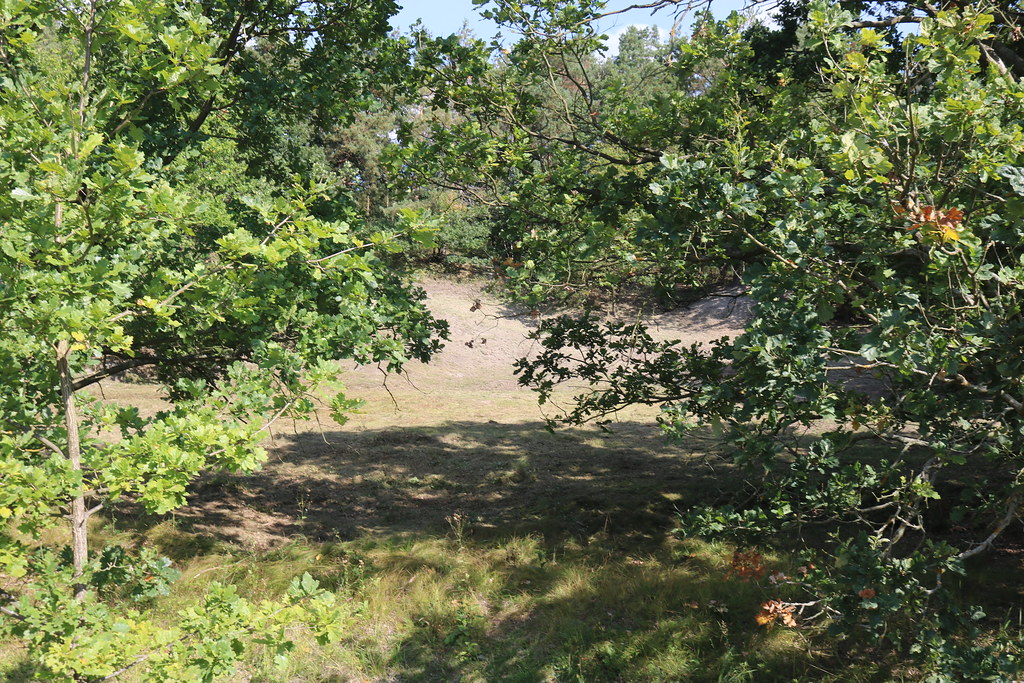
History:Slanisko u Škrle is a natural monument on the western edge of Škrle u Bílenců in the Chomutov district. The reason for its protection is the preservation of a remarkable halophyte locality with a species-rich occurrence of salt-tolerant and xerothermic species and the protection of populations of critically endangered plant species, including the sea-buckthorn. The site was used as pasture until the mid-twentieth century and was used occasionally until the 1970s. At that time, some parts were already forested with Pinus sylvestris and overgrown with broadleaved trees. The remaining areas of dry, narrow-leaved grassland began to be overgrown with tall grasses, dominated by reed canary grass (Calamagrostis epigejos), but their spread was slowed by the high salt content of the soil. The floodplain meadows along the Chomutovka River have been overgrown by common reed (Phragmites australis), whose occurrence has been reduced thanks to the designation of the natural monument in the area of the spring on the eastern edge of the site. Measures implemented according to the management plan have also prevented further spread of reeds, rushes and woody plants. The protected area was declared by the Chomutov district authority on 28 May 2002. The natural monument is registered in the Central List of Nature Conservation under the number 2173. It is managed by the Regional Authority of the Ústí nad Labem Region. The natural monument is part of the European site of the same name with a total area of 9.96 hectares, which was first declared on 3 November 2009. It is located within the protection zone, which adjoins the natural monument on the north-eastern, eastern and south-western sides. The protected area measures 3.41 hectares and is located at an altitude of 250-265 metres. The geological subsoil consists of sands, gravels and clays from the Lower to Middle Miocene, which are overlain by alluvial sandy clays in the Chomutovka floodplain. The most frequent salt-loving plant at the site is Plantago maritima, but there are also Melilotus dentatus, Centaurium pulchellum, Bupleurum tenuissimum, Spergularia salina and Inula britannica. Amongst the dry-loving plants, golden-headed starwort (Aster linosyris) and Danish goosefoot (Astragalus danicus Retz) predominate. In addition to reeds, the rare caraway (Selinum carvifolia), serratula (Serratula tinctoria), glossy yarrow (Thalictrum lucidum) and spring hellebore (Odontites vernus) grow in flooded meadows. The populations of Cnidium dubium and Carex melanostachya Willd. have been moved into the protected area. During the review of the occurrence of halophilous plants in the Chomutov region in 2018, the occurrence of the thinnest prosobrush, black-crowned sedge and coastal plantain was confirmed in Slanisko u Škrle. Although not found, it is likely that Gerard's rush (Juncus gerardii) and salt currant (Spergulariea marina) may also grow in the protected area. More notable animals on the Slanisko u Škrle include the common godwit (Jynx torquilla), the walrus (Sylvia nisoria) and the meadow pipit (Emberiza calandra).
Source:https://cs.wikipedia.org/wiki/Slanisko_u_%C5%A0krle
Impressions:An interesting natural monument, where a dirt road leads.