Visited:Unvisited
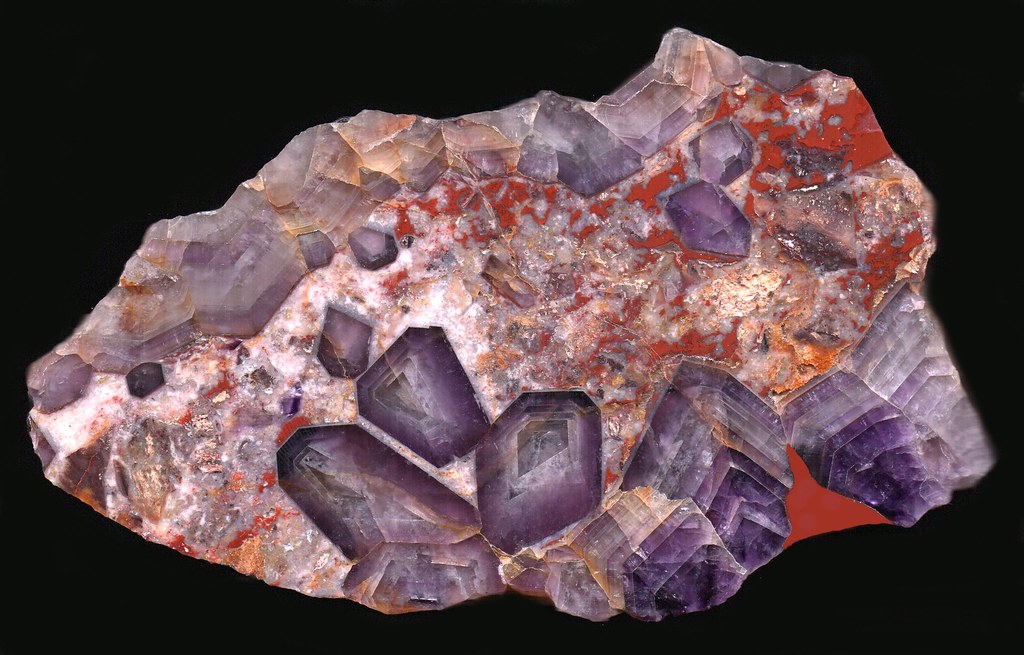
History:Ciboušov is a national natural monument declared for the protection of the mineralogical deposit of jaspers and amethysts, a precious form of quartz. It was declared by the decision of the Council of the District National Committee of Chomutov in 1983. It is situated at the foot of the Ore Mountains near the village of Ciboušov, not far from the town of Klášterec nad Ohří in the Ústí nad Labem Region, on an area of 4.96 ha. From the mineralogical point of view, Ciboušov is one of the most important national natural monuments in Northwest Bohemia. Quartz veins with precious stone varieties, jasper and amethysts, were found in this area in the 14th century and were mined until the 16th century. The veins were mined, which were one metre thick and consisted of purple amethysts, which were sharply defined and stacked in several layers, and the open cavities were filled with brick and flesh-coloured jasper. In the medieval period, when mining was at its most intensive, the processing of jasper and amethysts was very sophisticated. First, the rough and broken boulders were cut into thin slabs 8 to 15 millimetres thick. The cut plates of different sizes were then perfectly polished and polished on one side. The other side was left unworked. This uncut side was used to set the gems into the prepared beds in the applied plaster and the resulting joints were filled with stucco. Charles IV used these minerals to decorate the chapels of Karlštejn Castle (Chapel of the Holy Cross, Chapel of St. Catherine) and St. Wenceslas Chapel in St. Vitus Cathedral at Prague Castle. Mining was resumed in the nineteenth century. Human intervention in the landscape is still visible today in the form of boulders and mining trenches. However, mining was only proven in 1982, when Petr Machek carried out archaeological research in the area. He noticed the similarity of the gem varieties with the stones that were used to decorate the cathedral and Karlštejn. It was for this reason that the site was declared a specially protected area in 1982. The illegal collection and excavation of individual stones, especially for their subsequent sale, is a negative factor affecting the territory of the Ciboušova National Natural Monument. Collectors often dismantle whole stone drifts, carry out small excavations, mechanically break stones or take away whole stone blocks for their further processing, especially in stone workshops. However, the aim of the protection is to prevent further excavation of individual stones and at the same time to prevent breaking of stone drifts and thus to preserve the local important mineralogical site. The protection of this area also includes the protection of the old mining trench. The whole area is dominated by svoric rhyolites, which are transitioning to biotic pararulites, which are sometimes migmatised. The age of these rocks is estimated to be Upper Proterozoic to Lower Palaeozoic. In the region, the Svorian rocks represent transformed and recrystallised marine sediments. Due to repeated tectonic action, the massif was ruptured and the resulting fissures were subsequently filled with mineralised solutions. These processes resulted in the crystallization of minerals and the formation of hydrothermal veins. Often there was also multiphase development of the vein fill on the fissures. This was also the case at Ciboušov, where the gem vein fill was preceded by an older barite vein fill that was dissolved and replaced by quartz-hematite as a result of the hydrothermal process.
Source:https://cs.wikipedia.org/wiki/Cibou%C5%A1ov_(n%C3%A1rodn%C3%AD_p%C5%99%C3%ADrodn%C3%AD_pam%C3%A1tka)
Photo source:https://cs.wikipedia.org/wiki/Cibou%C5%A1ov_(n%C3%A1rodn%C3%AD_p%C5%99%C3%ADrodn%C3%AD_pam%C3%A1tka)
Impressions:An interesting national natural monument, which unfortunately I didn't photograph due to lack of photos.